
Yu Sleep Review 2026: What The Seller Claims, And What We Can Verify
Yu Sleep Review: What The Seller Claims About 3 AM Wake-Ups, And What We Can Verify
Author note: This review was prepared by the DeepSleepAid editorial team using publicly available ingredient information and the seller’s marketing claims. We have not tested the product. We earn a commission if you buy through our affiliate links. Individual results vary.
1. Introduction: What Yu Sleep Says It Does
Waking in the middle of the night and struggling to get back to sleep is common, and it has many possible causes (stress, alcohol, caffeine, sleep apnea, restless legs, medications, hormonal changes and other medical conditions). The seller markets Yu Sleep, a 10-ingredient sublingual liquid, as a way to support sleep maintenance. This is the seller’s claim: we have not tested the product, and no clinical trial of this exact formula is cited on this page.
This page summarizes what the seller says, what is generally known about the listed ingredients, the main caveats, and the price and refund terms, so you can decide whether it is worth discussing with a healthcare provider or trying.
2. The Listed Ingredients (General Background Only)
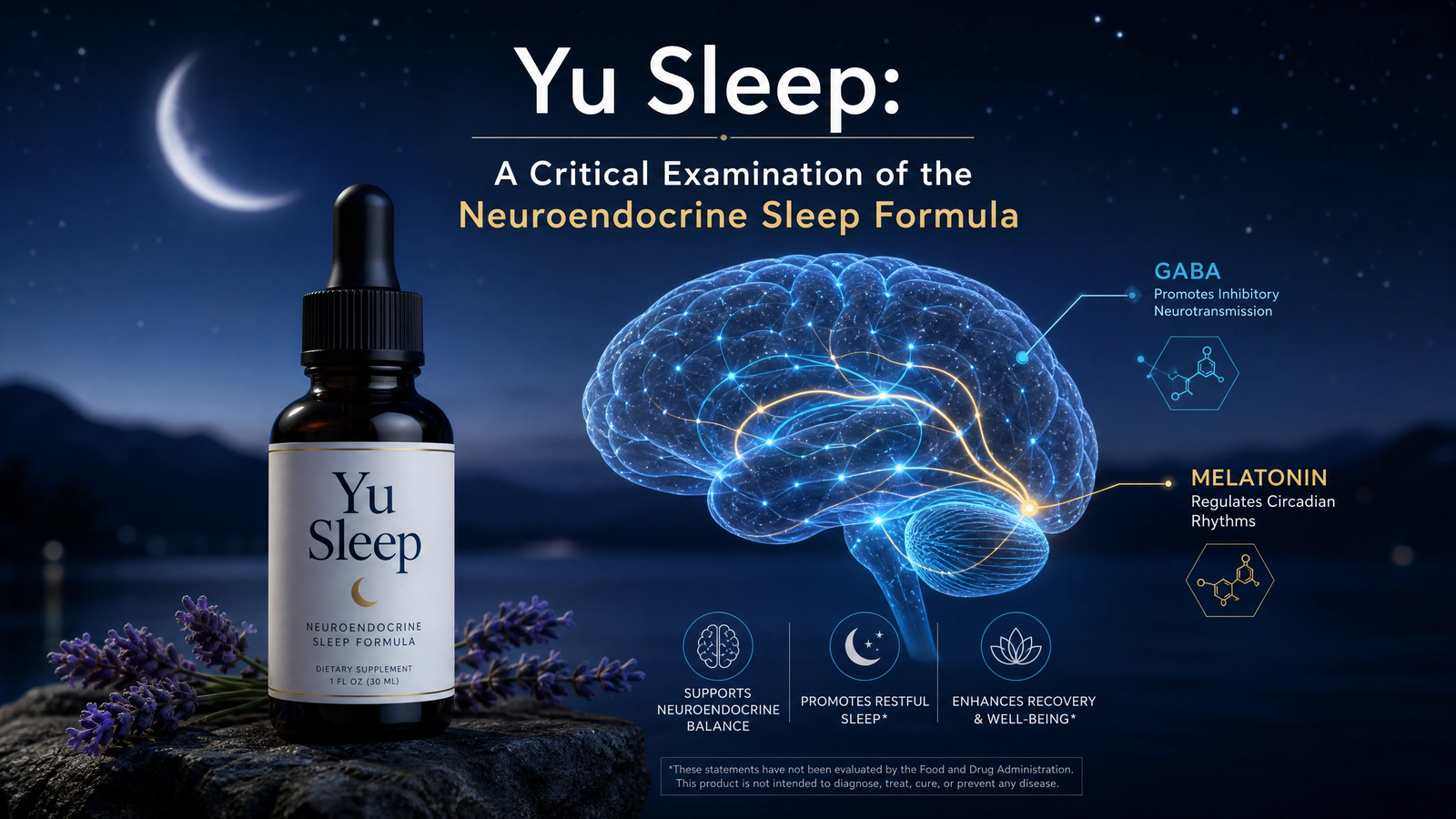
The seller lists ten ingredients that fall into three groups: calming plant extracts and amino acids (apigenin, passion flower, lemon balm, L-theanine, GABA), serotonin and melatonin precursors (5-HTP, L-tryptophan, B vitamins), and magnesium glycinate, plus red tart cherry extract. Each of these has some general research behind it, usually from small studies of the single ingredient at various doses. That is not evidence that this blend, at the doses in this product, works as marketed; the amounts per dose should be checked on the seller’s label.
The seller says the sublingual delivery improves absorption. We are not aware of independent data for this specific product, so treat that as an unverified marketing claim.
The seller’s idea: calming ingredients before bed may help some people stay asleep. This is a hypothesis, not a demonstrated result for this product.
3. What About GLP-1 And Weight? (We Make No Such Claim)
Sleep and appetite hormones are an active area of general research, but we are not aware of evidence that Yu Sleep changes GLP-1 levels or body weight, and you should not buy it for that purpose.
We make no claim that Yu Sleep causes weight loss or changes GLP-1 levels.
4. Optional Self-Check: Night-Time Waking Questionnaire
This short questionnaire is a simple prompt to think about your sleep. It is not validated, not a diagnosis, and does not show that any supplement will help. If you wake often, feel unrefreshed, snore or stop breathing at night, see a healthcare provider.
🧪 Night-Time Waking Self-Check (not a medical test)
5. How It Compares (Without Head-To-Head Evidence)
Most natural sleep aids emphasize either melatonin supplementation or simple minerals; the seller positions Yu Sleep as a multi-ingredient alternative. No head-to-head trial exists, so we cannot say how it compares with melatonin, magnesium or prescription treatments.
The seller advertises a 60-day money-back guarantee; confirm the current terms before buying. Long-term data on this formula are lacking.
- Sublingual liquid format (seller says it improves absorption; unverified)
- Marketed as targeting night-time cortisol (not independently verified)
- Contains no added synthetic melatonin, per the seller’s ingredient list
- Morning grogginess: no reliable data for this product
- No evidence presented for metabolic benefits
- High monthly cost vs. generic alternatives
- Limited independent clinical trials of the specific blend
- Requires 2+ months to assess full effect
- Not suitable with serotonergic medications without MD consult
- Results vary substantially by individual etiology
6. Safety And Who Should Check With A Doctor First
Supplement safety depends on the ingredients, doses and your health. 5-HTP and L-tryptophan can interact with antidepressants (SSRIs, MAOIs) and other serotonergic medicines and, in rare cases, contribute to serotonin syndrome. Magnesium can affect people with kidney problems. Several herbal ingredients can interact with sedatives or other medicines. Avoid it unless a doctor agrees if you are pregnant, breastfeeding, under 18, take prescription medicines, or have a medical condition. Stop and seek medical advice if you feel unwell.
- Howatson G, et al. (2012). Effect of tart cherry juice (Prunus cerasus) on melatonin levels and enhanced sleep quality. European Journal of Nutrition.
- Abbasi B, et al. (2012). The effect of magnesium supplementation on primary insomnia in elderly: a double-blind placebo-controlled clinical trial. Journal of Research in Medical Sciences.
- Held K, et al. (2002). Oral Mg(2+) supplementation reverses age-related neuroendocrine and sleep EEG changes in humans. Pharmacopsychiatry.
- Tasali E, et al. (2022). Effect of sleep extension on objectively assessed energy intake among adults with overweight in real-life settings. JAMA Internal Medicine.
7. Access and Affiliate Transparency
Yu Sleep is sold through the seller’s own website (per the seller). Current pricing and package options are on the seller’s page:
Package tiers shown when this review was last checked: 2-month ($138), 3-month ($177) and 6-month ($294), each with a 60-day return window according to the seller. Prices and terms can change; verify before buying. A second affiliate link is provided for readers who want to compare packages.
8. Frequently Asked Questions
9. Conclusion: Should You Consider It?
Yu Sleep is a supplement marketed to adults with night-time waking. We cannot confirm that it works: no clinical trial of this exact formula is cited here. It is not a substitute for medical evaluation, sleep hygiene or cognitive behavioral therapy for insomnia, and anyone with persistent sleep problems should speak to a healthcare provider.
No numeric rating: we have no independent test data to support one.