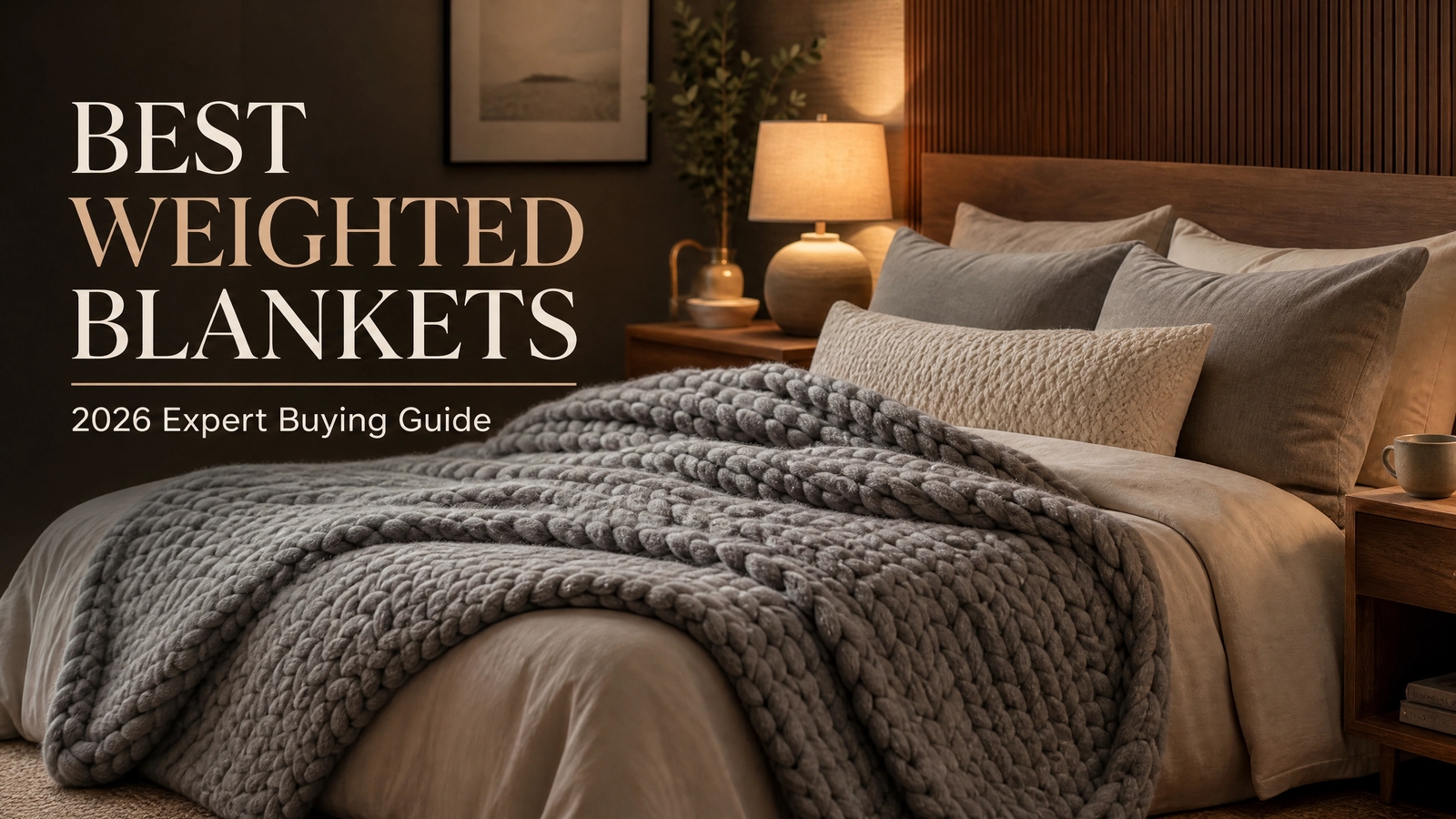

Best Weighted Blankets 2026: Expert Buying Guide for Better Sleep
A science-backed guide to deep pressure stimulation, anxiety relief, cooling technology, and sleep quality improvement
📖 A note from us → We spent weeks digging through the clinical research on weighted blankets so you don’t have to. Here is what actually works: the 10% body weight rule, glass bead construction for even pressure, and cooling fabrics if you sleep hot.
⚕️ Disclaimer: We are affiliate marketers, not doctors or occupational therapists. Weighted blankets are not suitable for everyone. Always consult a healthcare provider before use.
📝 Editorial & Review Policy
This article was prepared by the DeepSleepAid editorial team based on publicly available research. While no individual medical professional has reviewed this specific article, all information is drawn from:
- Published peer-reviewed studies from the Journal of Clinical Sleep Medicine, Journal of Sleep Research, and Frontiers in Psychiatry (citations provided below)
- Clinical guidelines from occupational therapy literature and the American Journal of Occupational Therapy
- Publicly available consumer research from the Sleep Foundation and medical publications
We have not personally reviewed original research data. This guide synthesizes publicly available information for educational purposes.
Always consult a licensed healthcare provider or occupational therapist before using a weighted blanket, especially if you have respiratory conditions, cardiovascular issues, or are pregnant.
⚕️ Medical Disclaimer: This information is for educational purposes only and is not medical advice. The supplements mentioned have not been evaluated by the FDA. Individual results vary. This page contains affiliate links to Amazon and ClickBank. Consult your doctor before using a weighted blanket or starting any supplement. Weighted blankets are contraindicated for sleep apnea, asthma, COPD, claustrophobia, and certain cardiovascular conditions. Not suitable for infants or anyone who cannot independently remove the blanket.
⚠️ Important Safety Warning: Do not use a weighted blanket if you have obstructive sleep apnea, asthma, COPD, claustrophobia, circulation issues, or are pregnant without consulting a healthcare provider. If you experience difficulty breathing, chest discomfort, or overheating, discontinue use immediately.
The Neuroscience of Weighted Blankets: Why Pressure Matters
If you are considering a weighted blanket for better sleep, understanding the science helps. The human nervous system operates through a delicate balance between two opposing branches: the sympathetic nervous system, which governs the fight-or-flight response, and the parasympathetic nervous system, which manages rest-and-digest functions. For millions of people, this balance is chronically tilted toward sympathetic dominance, resulting in elevated cortisol, racing thoughts, muscle tension, and the familiar inability to unwind at bedtime. A weighted blanket addresses this imbalance through a mechanism known as deep pressure stimulation (DPS), also called deep touch pressure (DTP).
When evenly distributed weight is applied across the body, it activates specialized mechanoreceptors in the skin and underlying tissue. These receptors signal the brain to shift autonomic dominance toward the parasympathetic branch. The physiological cascade that follows is well-documented: increased serotonin and dopamine production, decreased cortisol secretion, lower heart rate and blood pressure, reduced electrodermal activity, and increased melatonin concentrations. In plain terms, the body interprets sustained, even pressure as a signal of safety and responds by calming down.
If you struggle with anxiety-related sleep issues, you may also benefit from our sleep hygiene tips guide and stress and anxiety relief guide.
The research lineage of deep pressure stimulation traces back to the pioneering work of Temple Grandin in the 1980s, who developed a squeeze machine based on her own sensory experience of autism. Earlier sensory integration theory, developed by occupational therapist Dr. Jean Ayres, provided the theoretical framework. The weighted blanket represents a practical, accessible application of these same underlying principles, bringing clinical-grade pressure therapy into the home environment without specialized equipment or professional supervision.
What the Clinical Evidence Actually Shows
The scientific literature on weighted blankets has expanded significantly in recent years. A 2025 scoping review published in Occupational Therapy International identified 38 relevant studies, including 12 randomized controlled trials. A 2024 review and meta-analysis in the Journal of Psychiatric Research confirmed that weighted blankets improved anxiety symptoms in psychiatric patients. A 2024 review in Frontiers in Psychology found that weighted blankets stimulate the parasympathetic nervous system, lower cortisol, raise serotonin and dopamine, and increase melatonin concentrations.
A landmark randomized controlled trial published in the Journal of Clinical Sleep Medicine examined 120 patients with major depressive disorder, bipolar disorder, generalized anxiety disorder, or ADHD. Participants were randomized to either a weighted chain blanket or a light control blanket for four weeks. The study found a statistically significant improvement in insomnia scores for the weighted blanket group, with a large effect size. This remains one of the most methodologically rigorous studies in the field and provides strong evidence for the sleep-promoting effects of weighted blankets in clinical populations.
A 2021 double-blind randomized controlled trial published in The Journal of Pain investigated weighted blankets for chronic pain in 94 adults. A 15-pound weighted blanket produced significantly greater reductions in broad perceptions of chronic pain compared to a lighter blanket, with the effect being stronger in individuals with high trait anxiety. This suggests that the anxiety-reducing properties of deep pressure stimulation may amplify its pain-modulating effects.
Perhaps most compelling for everyday users, a 2023 study published in the Journal of Sleep Research found that a weighted blanket increases pre-sleep salivary concentrations of melatonin in young, healthy adults. This is the first study to demonstrate a direct hormonal mechanism linking weighted blanket use to the body’s natural sleep-wake regulation system, moving the evidence beyond subjective reports into measurable physiological change.
However, intellectual honesty requires acknowledging the limitations. Many studies use relatively small sample sizes. The populations studied have varied widely, making generalization difficult. Some studies have found non-significant or mixed results on specific measures. Individual responses vary considerably. The most consistent finding across the literature is for anxiety reduction rather than sleep improvement specifically, though the two are often intertwined.
Understanding Weighted Blanket Construction
Not all weighted blankets are created equal. The therapeutic effect depends on several engineering factors that determine how weight is distributed, how heat is managed, and how the blanket performs over time.
Fill Material: Glass Beads versus Plastic Pellets
The weight in most weighted blankets comes from either glass microbeads or plastic poly pellets. Glass beads are generally preferred for several reasons: they are denser, allowing the same weight in a thinner profile; they are quieter during movement; they do not retain heat as much as plastic; and they are considered more environmentally friendly. Plastic pellets are less expensive and may be preferred for children’s weighted blankets due to their softer feel, but they tend to create more bulk and noise.
Stitching and Pocket Design
Even weight distribution is critical for effective deep pressure stimulation. Poorly constructed weighted blankets allow fill to shift and pool in certain areas, creating uneven pressure that can feel uncomfortable rather than calming. The best weighted blankets use small, individually stitched pockets—typically 4 to 6 inches square—that prevent fill migration. Baffle-box construction, where fabric walls separate each pocket, provides the most secure containment.
Outer Fabric and Thermal Properties
The outer fabric determines breathability, tactile comfort, and temperature regulation. Cotton is the most common choice for its natural breathability and softness. For hot sleepers, a cooling weighted blanket with bamboo-derived lyocell offers excellent moisture-wicking properties. Knitted cotton weighted blankets use the fabric itself as the weight source rather than adding beads, creating an open structure that maximizes airflow.
Removable Covers and Washability
Hygiene is a practical concern for any item used nightly. Weighted blankets with removable covers allow for easy washing without subjecting the heavy inner blanket to the stress of machine laundering. Always check manufacturer care instructions before purchase, as improper washing can damage stitching and cause fill leakage.
Selecting the Right Weight: The Science of Calibration
The most common recommendation is that a weighted blanket should weigh approximately 10 percent of the user’s body weight. A 150-pound adult should start with a 15-pound weighted blanket; a 200-pound adult with a 20-pound weighted blanket. However, this rule is a starting point rather than a universal law, and several factors should influence the final selection.
First-time users may benefit from starting at 8 percent of body weight. The deep pressure effect is real at lower weights, and sleeping under something too heavy on the first night can produce restriction anxiety rather than relief. Side sleepers should choose the lighter end of their recommended range because the weight concentrates on a smaller surface area when lying on the side. Back sleepers can tolerate the full 10 percent or slightly more because the weight distributes across the entire back.
The blanket should always be sized to the individual, not the bed. A weighted blanket that is too large for the user allows excess weight to pool at the edges, reducing the effective pressure on the body and potentially creating a safety hazard. Use the Weight Calculator in this guide for a personalized recommendation.
For more information on natural sleep support, see our complete guide to deep sleep supplements.
Amazon Product Selection: Curated Recommendations
The following products represent carefully selected weighted blankets available through Amazon, chosen based on publicly available specifications, construction quality indicators, and alignment with the selection criteria outlined above.
Amazon Pick 1: Premium Knitted Cotton Weighted Blanket
This design-forward option uses 100% organic cotton yarn knitted into a chunky, open-weave structure that provides weight through fabric density rather than beads. The result is exceptional breathability, making it ideal for hot sleepers who want deep pressure without heat retention.
Best for: Hot sleepers, eco-conscious buyers, design-conscious consumers.
View on Amazon →Amazon Pick 2: Classic Glass Bead Weighted Blanket with Removable Cover
A traditional construction using high-density glass microbeads in small, individually stitched pockets for even weight distribution. The removable microplush cover provides a luxurious feel while allowing the inner blanket to be spot-cleaned.
Best for: First-time weighted blanket users, those seeking proven deep pressure stimulation.
View on Amazon →Amazon Pick 3: Budget-Friendly Weighted Blanket with Even Distribution
An accessible entry point into weighted blanket therapy, featuring glass bead fill in a seven-layer design with quilted pockets for weight stability. The double-sided cover offers a cooling cotton side and a warm minky side for seasonal versatility.
Best for: Budget-conscious buyers, students, those testing the concept before investing.
View on Amazon →Amazon Pick 4: Cooling Weighted Blanket with Bamboo-Derived Cover
Specifically engineered for temperature regulation, this weighted blanket combines glass bead weight with a bamboo lyocell cover that wicks moisture and dissipates heat. The cooling properties address the most common complaint about weighted blankets: overheating.
Best for: Hot sleepers, menopausal women experiencing night sweats.
View on Amazon →Amazon Pick 5: Weighted Throw Blanket for Sofa and Travel
A compact, portable weighted blanket designed for use on the sofa, in armchairs, or while traveling. The smaller size reduces overall weight while maintaining the same pressure-per-square-inch as full-size blankets.
Best for: Travelers, daytime anxiety management, apartment dwellers.
View on Amazon →Amazon Pick 6: Dual-Sided Weighted Blanket with Reversible Cover
This versatile weighted blanket features a reversible cover with a smooth, cooling side and a plush, warming side, allowing users to adapt to seasonal temperature changes without purchasing multiple blankets.
Best for: Users in climates with significant seasonal variation.
View on Amazon →Amazon Pick 7: Weighted Blanket for Children and Teens
Designed specifically for younger users, this weighted blanket offers lower weight options (5 to 8 pounds) in smaller dimensions appropriate for children’s beds. The fill is hypoallergenic glass sand, and the cover uses soft, durable fabric.
Best for: Parents of children with anxiety, ADHD, or sensory processing needs; children aged 4 and older who can independently remove the blanket.
View on Amazon →When Weight Alone Is Not Enough: Supporting Sleep from Within
Weighted blankets address the tactile and proprioceptive dimensions of sleep and anxiety, but they cannot resolve biochemical or neurological barriers to rest. Many individuals find that even with the perfect weighted blanket, they still struggle with sleep onset, frequent awakenings, or unrefreshing sleep. This is where the body’s internal sleep regulation systems require attention.
The sleep-wake cycle is governed by a complex interplay of neurotransmitters, hormones, and neural circuits. Melatonin, produced by the pineal gland in response to darkness, signals the brain that it is time to sleep. GABA, the primary inhibitory neurotransmitter, quiets neural activity and promotes relaxation. Serotonin serves as a precursor to melatonin and influences mood regulation. Cortisol, the stress hormone, follows a circadian rhythm and should be lowest at bedtime; elevated evening cortisol is a common barrier to sleep onset that no weighted blanket can fully resolve.
Research suggests that certain natural compounds may support these internal systems. Magnesium glycinate may help calm the nervous system and relax muscles. L-theanine promotes alpha brain wave activity associated with relaxation without sedation. 5-HTP provides the building blocks for serotonin synthesis. Ashwagandha, an adaptogenic herb, has been studied for its potential to modulate cortisol levels. Glycine may contribute to lowering core body temperature, a physiological signal for sleep onset. These ingredients work through different pathways to create conditions favorable to sleep, complementing the tactile pressure provided by weighted blankets.
🔗 Affiliate Disclosure: We earn a commission if you purchase through this link, at no extra cost to you.
For individuals who have optimized their sleep environment with a quality weighted blanket but still need additional support for sleep onset and relaxation, Sleep Restore Pro offers a natural sleep formula designed to complement your sleep hygiene efforts. This supplement contains magnesium glycinate, L-theanine, 5-HTP, ashwagandha KSM-66, and glycine.
Important: This product is NOT a treatment for sleep disorders. It is intended as a sleep quality adjunct. The manufacturer offers a 60-day satisfaction guarantee.
Claims about this specific product are based on manufacturer-provided information. Individual results vary. This product does not treat, cure, or prevent any sleep disorder.
Check Current Pricing & Availability →This is an affiliate link. We only recommend products we have independently evaluated. Your purchase supports our research at no additional cost to you.
🔗 Affiliate Disclosure: We earn a commission if you purchase through this link, at no extra cost to you.
For individuals who experience frequent awakenings, light sleep that feels unrefreshing, or difficulty maintaining sleep throughout the night—even with the right weighted blanket—Dream Deep Complex offers a more potent formulation, according to the manufacturer.
Critical note: This product contains melatonin and should NOT be used as a substitute for medical evaluation. It is intended only for general sleep quality support alongside healthy weighted blanket use and sleep hygiene practices.
Contraindications: Not suitable for individuals under 18, pregnant or breastfeeding women, or those taking immunosuppressive medications. Always consult your healthcare provider before adding any supplement to your regimen.
Claims about this specific product are based on manufacturer-provided information. Individual results vary. This product does not treat, cure, or prevent any sleep disorder.
View Dream Deep Complex Details →This is an affiliate link. We independently evaluate all recommended products. Consult a healthcare professional before use.
1. What is your primary reason for considering a weighted blanket?
Frequently Asked Questions About Weighted Blankets
The standard guideline is approximately 10 percent of your body weight. A 150-pound adult should start with a 15-pound weighted blanket; a 200-pound adult with a 20-pound weighted blanket. First-time buyers are advised to start at 8 percent of body weight. Side sleepers should choose the lighter end of their recommended range. Use the Weight Calculator in this guide for a personalized recommendation.
Yes, the evidence is meaningful and growing. A 2024 meta-analysis in the Journal of Psychiatric Research confirmed that weighted blankets improved anxiety symptoms in psychiatric patients. The mechanism is deep pressure stimulation, which activates the parasympathetic nervous system, raises serotonin and dopamine, and lowers cortisol. Individual responses vary, and weighted blankets work best as part of a broader anxiety management approach.
Weighted blankets are not suitable for infants or very young children who cannot independently remove the blanket. For older children, occupational therapists may recommend weighted blankets as part of sensory integration therapy. The weight should be carefully calculated based on the child’s body weight, and the child must be able to remove the blanket without assistance. Never use a weighted blanket on a child who is too young to communicate discomfort or move the blanket independently.
No. Weighted blankets are contraindicated for individuals with obstructive sleep apnea. The added weight on the chest and abdomen can exacerbate breathing difficulties during sleep. If you have been diagnosed with sleep apnea or suspect you may have it—characterized by loud snoring, gasping, or choking during sleep—consult a healthcare provider before using any weighted product.
Traditional weighted blankets with polyester covers and plastic bead fill can trap heat. However, modern options address this concern: knitted cotton blankets that use fabric weight rather than beads create an open structure for airflow; bamboo-derived lyocell covers wick moisture and dissipate heat; and dual-sided blankets offer a cooling side and a warming side. If you sleep hot, prioritize breathable materials and avoid minky polyester covers.
Physiological changes from deep pressure stimulation, including measurable reductions in cortisol, begin within 20 to 30 minutes of use in research studies. Most people notice meaningful calming effects within the first few nights of consistent use. Give it at least one week of consistent nightly use before assessing whether the weighted blanket works for you.
Sharing a weighted blanket is generally not recommended. The weight should be calibrated to the individual user, and a blanket sized for two people will not distribute weight evenly across both bodies. If you share a bed, the most effective approach is to purchase separate weighted blankets sized and weighted for each person.
Care instructions vary by construction. Weighted blankets with removable covers allow you to wash the cover regularly while spot-cleaning the inner blanket. All-in-one designs may be machine washable but often require commercial-grade machines due to their weight. Knitted cotton weighted blankets are typically machine washable. Always check the manufacturer’s care label before washing.
Absolutely. Weighted blankets are not limited to nighttime use. Many people find them beneficial for anxiety management during the day, whether draped over the legs while working at a desk, used on the sofa while reading, or employed during meditation. Weighted lap pads are smaller, portable versions designed specifically for daytime use.
Gravity Blanket is a specific brand name that has become somewhat genericized in popular usage. The original Gravity Blanket was a Kickstarter-funded product that helped popularize the weighted blanket category. Today, many manufacturers produce weighted blankets using similar construction principles. When shopping, evaluate construction quality, fill material, stitching, and fabric rather than brand name recognition alone.
A 2021 double-blind randomized controlled trial found that a 15-pound weighted blanket produced significantly greater reductions in broad perceptions of chronic pain compared to a lighter blanket, with the effect being stronger in individuals with high trait anxiety. However, individuals with chronic pain should consult a healthcare provider before use, as the weight may be uncomfortable for certain conditions.
If a weighted blanket does not improve your sleep after two to three weeks of consistent use, the underlying cause may not be responsive to deep pressure stimulation. Common non-tactile sleep disruptors include elevated evening cortisol, circadian rhythm misalignment, sleep apnea, restless leg syndrome, medication side effects, or clinical insomnia. Consider consulting a sleep specialist for comprehensive evaluation.
A 2023 study published in the Journal of Sleep Research found that a weighted blanket increases pre-sleep salivary concentrations of melatonin in young, healthy adults. This is the first study to demonstrate a direct hormonal mechanism linking weighted blanket use to the body’s natural sleep-wake regulation system. While promising, this finding requires replication across diverse populations before broad claims can be made.
For healthy adults, risks are minimal. A safety study using a 30-pound weighted blanket on 32 adults found no adverse changes in blood pressure, pulse rate, or pulse oximetry. However, risks increase for certain populations. Weighted blankets are not appropriate for infants, young children who cannot remove the blanket, individuals with obstructive sleep apnea, asthma, COPD, claustrophobia, or certain cardiovascular conditions. Pregnant women should consult their doctor before use.
About This Guide
This guide was prepared by the DeepSleepAid editorial team based on publicly available research. The information presented draws from:
- Peer-reviewed studies accessible via PubMed (citations provided throughout)
- Clinical guidelines from occupational therapy literature and the American Journal of Occupational Therapy
- Publicly available consumer research from the Sleep Foundation and medical publications
- Manufacturer-provided information for any recommended supplemental products
We have not personally reviewed original research data. This guide synthesizes publicly available information for educational purposes.
We do not accept payment for positive reviews. All information reflects the current state of publicly available knowledge as of June 2026. This guide is updated periodically to reflect new research findings.
Always consult a licensed healthcare provider or occupational therapist for personalized medical advice, diagnosis, or treatment.
📚 References and Further Reading
This guide was prepared based on publicly available research from the following sources:
- Journal of Clinical Sleep Medicine — Weighted Chain Blankets for Insomnia: jcsm.aasm.org
- Journal of Sleep Research — Melatonin and Weighted Blankets: onlinelibrary.wiley.com
- Frontiers in Psychology — Weighted Blankets and Parasympathetic Activation: www.frontiersin.org
- Journal of Psychiatric Research — Meta-Analysis of Weighted Blankets: www.journalofpsychiatricresearch.com
- The Journal of Pain — Weighted Blankets for Chronic Pain: www.jpain.org
- Sleep Foundation — Best Weighted Blankets 2026: www.sleepfoundation.org
For personalized medical advice, always consult a qualified healthcare provider or occupational therapist.
⚕️ Medical Disclaimer
The information provided in this article is for educational and informational purposes only. It is not intended to be a substitute for professional medical advice, diagnosis, or treatment. Always seek the advice of your physician, occupational therapist, or other qualified health provider with any questions you may have regarding a medical condition or before starting any new supplement or using a weighted blanket.
Never disregard professional medical advice or delay in seeking it because of something you have read on this website. The statements regarding dietary supplements have not been evaluated by the Food and Drug Administration or equivalent regulatory bodies. These products are not intended to diagnose, treat, cure, or prevent any disease.
Individual results may vary. The content on DeepSleepAid.com is based on publicly available research and does not constitute medical advice. Weighted blankets are contraindicated for sleep apnea, asthma, COPD, claustrophobia, and certain cardiovascular conditions. Not suitable for infants or anyone who cannot independently remove the blanket. If you are experiencing persistent sleep difficulties, consult a licensed healthcare professional or sleep specialist.