
Best Sleep Headphones 2026: Expert Buying Guide for Restful Nights
A science-backed guide to noise masking earbuds, side-sleeper headbands, and wireless audio technology for restorative sleep
📖 A note from us → We spent weeks digging through the research on sleep headphones so you don’t have to. Here is what actually works: in-ear earbuds for side sleepers, headband designs for comfort, and safe listening practices to protect your hearing.
⚕️ Disclaimer: We are affiliate marketers, not audiologists or doctors. This guide is for educational purposes. Always protect your hearing health.
📝 Editorial & Review Policy
This article was prepared by the DeepSleepAid editorial team based on publicly available research. While no individual medical professional has reviewed this specific article, all information is drawn from:
- Published peer-reviewed studies on sleep audio and noise masking (citations provided below)
- Clinical guidelines from audiologists and the World Health Organization on safe listening
- Publicly available consumer research from the Sleep Foundation, Wirecutter, and technology publications
We have not personally reviewed original research data. This guide synthesizes publicly available information for educational purposes.
Always consult a licensed healthcare provider or audiologist before using sleep audio devices if you have hearing concerns.
⚕️ Medical Disclaimer: This information is for educational purposes only and is not medical advice. The supplements mentioned have not been evaluated by the FDA. Individual results vary. This page contains affiliate links to Amazon and ClickBank. Consult your doctor before starting any new supplement, especially if you have hearing conditions, tinnitus, or sleep disorders. Keep volume at safe levels to protect hearing health.
⚠️ Hearing Safety Warning: Prolonged exposure to high-volume audio can cause permanent hearing damage. The World Health Organization recommends keeping recreational sound exposure below 85 decibels. For sleep use, lower is better. If you experience ringing in your ears or muffled hearing, reduce volume immediately and consult an audiologist.
Why Sleep Headphones Have Become Essential
For millions of people, the transition from wakefulness to sleep is not a peaceful descent but a battle against environmental noise. Traffic rumble, snoring partners, barking dogs, and urban soundscapes create a cacophony that prevents the brain from entering the relaxed state necessary for sleep onset. Research published in the Journal of Clinical Sleep Medicine indicates that environmental noise is one of the most significant external disruptors of sleep architecture, fragmenting sleep cycles and reducing time spent in restorative deep sleep stages.
If you struggle with sleep quality, you may also benefit from our sleep hygiene tips guide and breathing exercises for sleep.
The market for sleep-specific audio technology has expanded dramatically in response to this widespread challenge. Unlike standard headphones designed for daytime listening, sleep headphones are engineered for extended wear during horizontal rest. They must address a unique set of constraints: they must remain comfortable when pressed against a pillow, they must not create pressure points that cause pain or circulatory restriction, they must maintain acoustic seal and sound quality in non-upright positions, and they must operate safely for eight or more hours without overheating or battery failure.
Clinical audiologist Jalene Nadeau notes that the effect of audio on sleep is highly individual. Relaxing music or white noise might help some individuals, while others might find the same sounds disruptive. The key is having the flexibility to control what you hear, at what volume, and for how long. This individual variability is precisely why the sleep headphones market has diversified into multiple form factors, each addressing different physiological preferences and acoustic needs.
The Science of Sleep Audio: How Sound Affects Sleep Architecture
To understand why sleep headphones can be effective, it is necessary to examine the neurophysiological relationship between auditory input and sleep regulation. The auditory system remains partially active during sleep, particularly during lighter stages. This means that external sounds can influence sleep quality even when the sleeper is not consciously aware of them.
Noise Masking and Sound Conditioning
Noise masking works not by eliminating sound but by raising the auditory threshold so that disruptive noises become less perceptible. The brain processes constant, predictable sounds differently from sudden, variable sounds. A steady stream of pink noise, brown noise, or nature soundscapes creates an acoustic blanket that reduces the contrast between background noise and intermittent disturbances. Research suggests that consistent noise masking can reduce the frequency of micro-arousals—brief awakenings that fragment sleep and reduce its restorative quality.
Active Noise Cancellation versus Passive Isolation
Active noise cancellation (ANC) technology uses microphones to detect external sound frequencies and generates inverse waveforms to cancel them out. This is highly effective for low-frequency, consistent noises such as air conditioning hum or traffic drone. However, ANC is less effective for sudden, high-frequency sounds like a partner’s snoring or a dog’s bark. Passive noise isolation, achieved through physical ear seal, blocks a broader spectrum of sound but depends entirely on fit quality. The most effective sleep headphones often combine both approaches: ANC for environmental drone and passive isolation for sudden acoustic events.
Binaural Beats and Brainwave Entrainment
Some sleep headphones and associated applications offer binaural beats—slightly different frequencies delivered to each ear that the brain perceives as a single, modulated tone. Proponents suggest that binaural beats in the delta range (0.5-4 Hz) may promote the brainwave patterns associated with deep sleep. While research on binaural beats remains preliminary and results are mixed, some users report subjective improvements in relaxation and sleep onset.
Adaptive Snore Masking
One of the most innovative developments in sleep audio technology is adaptive snore masking. Rather than playing constant noise all night, these systems use microphones to detect snoring sounds and dynamically activate colored noise only when needed. This preserves battery life, reduces unnecessary auditory stimulation, and provides targeted acoustic intervention. The technology represents a significant advancement over traditional white noise machines, which operate indiscriminately regardless of whether disruptive sounds are actually present.
Form Factor Analysis: Which Style Suits Your Sleep Profile
The sleep headphones market has evolved into four primary form factors, each with distinct advantages, limitations, and ideal user profiles. Understanding these categories is essential for making an informed purchase decision.
In-Ear Sleep Earbuds
In-ear sleep headphones are the most compact option, designed to sit within the ear canal with minimal protrusion. The best models weigh mere grams and feature silicone or memory foam tips that conform to the ear’s anatomy. Their primary advantage is discretion: they do not require headbands, straps, or external support structures. For side sleepers, the critical consideration is profile height. Even a few millimeters of protrusion can create uncomfortable pressure points when compressed against a pillow. Premium models address this through ultra-low-profile designs, cushioned wings, or custom-fit options.
Headband and Sleep Mask Audio Systems
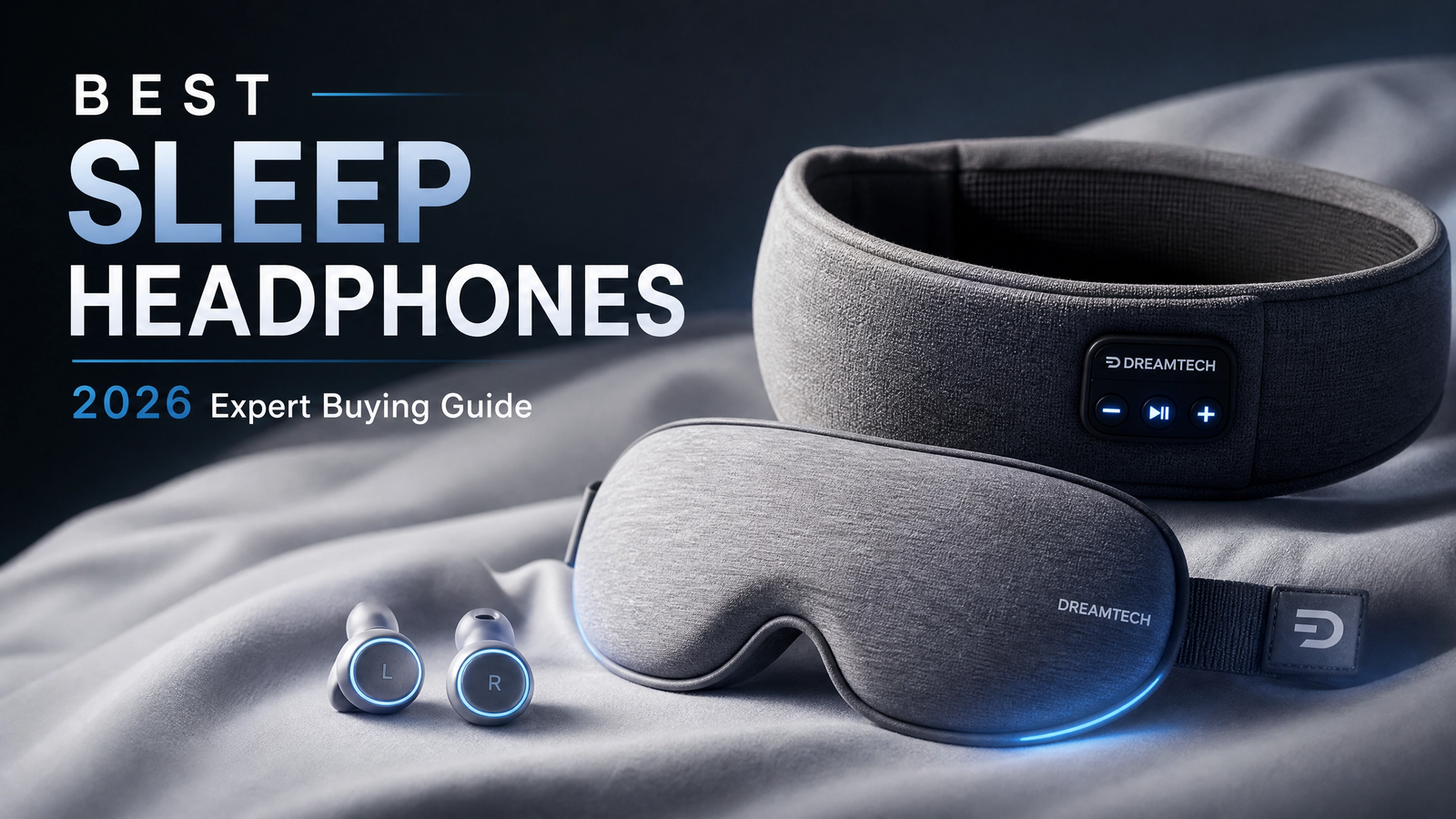
Headband-style sleep headphones encase ultra-thin speakers within a soft fabric band that wraps around the head. This design eliminates ear canal insertion entirely, making it ideal for individuals who cannot tolerate in-ear devices. The flat, felt-covered speakers distribute pressure evenly across a broad surface, preventing the localized pressure points that cause side-sleeper discomfort with traditional headphones.
On-Ear Ultra-Thin Designs
On-ear ultra-thin sleep headphones represent a hybrid approach. They rest on the ear rather than in the canal, but feature exceptionally slim profiles that minimize pressure against pillows. These designs appeal to users who want the simplicity of on-ear positioning without the bulk of traditional headphones.
Combined Sleep Mask and Audio Systems
For individuals who need both light blocking and audio, combined sleep mask sleep headphones offer a dual-function solution. These systems are particularly valuable for travelers, shift workers, or anyone sleeping in environments with both light and noise disturbances.
Critical Selection Criteria: What to Evaluate Before Purchasing
The sleep headphones market spans price points from under twenty dollars to over two hundred and fifty dollars. This wide variation reflects differences in technology, materials, and acoustic engineering. Evaluating the following criteria will help you identify the product that aligns with your specific needs and budget.
Comfort and Ergonomic Design
Comfort is the paramount consideration for sleep headphones. A flexible, ergonomic design and soft, hypoallergenic materials enhance overall comfort during extended wear. For side sleepers, profile height is the critical variable: even a few millimeters of thickness can create painful pressure points when compressed between ear and pillow.
Sound Quality and Acoustic Performance
Consider whether you need high-fidelity audio for music and podcasts or simple sound masking for sleep. Sleep-specific models often prioritize comfort over audiophile-grade sound reproduction, but the best options deliver clear, balanced audio that does not distort at low volumes.
Noise Control Technology
Active noise cancellation uses microphones to block sound frequencies, while passive noise cancellation relies on physical design. Noise cancellation is excellent for blocking distractions, but it can also muffle essential sounds such as alarms.
Build Quality and Durability
Sleep headphones undergo unique stressors: they are subjected to sweat, oil, and movement for eight hours nightly, compressed against pillows, and frequently washed or wiped down. Build quality determines how well they withstand this regimen.
Amazon Product Selections: Curated Recommendations
The following products represent carefully selected sleep headphones options available through Amazon, chosen based on publicly available specifications, user feedback patterns, and alignment with the selection criteria outlined above.
Amazon Pick 1: Premium Sleep Earbuds with Advanced Noise Masking
This category-leading option features active noise cancellation combined with adaptive snore-masking technology. The ultra-compact design sits flush within the ear canal, making it suitable for side sleepers. The companion application allows custom sound blending, sleep tracking, and smart volume reduction as you fall asleep.
Best for: Side sleepers, snoring partners, tech-forward users who want comprehensive sleep audio control.
View on Amazon →Amazon Pick 2: Wireless Sleep Headband with Flat Speakers
A soft, breathable headband design with ultra-thin speakers that distribute pressure evenly across the ear. The wireless Bluetooth connection eliminates cable concerns, while the machine-washable fabric (with removable electronics) ensures hygiene. Available in multiple sizes and fabric options.
Best for: Users who dislike in-ear devices, hot sleepers who prefer breathable fabrics.
View on Amazon →Amazon Pick 3: Budget-Friendly Sleep Earbuds with Solid Isolation
An affordable entry point into sleep audio technology, featuring soft silicone ear tips with double-layer design for improved passive isolation. The minimal profile allows side sleeping without significant pressure, while Bluetooth 5.2 provides stable streaming.
Best for: Budget-conscious buyers, students, first-time sleep headphones users.
View on Amazon →Amazon Pick 4: Combined Sleep Mask and Headphone System
This dual-function device addresses both light and noise disturbances simultaneously. The padded mask blocks ambient light effectively while housing thin speakers positioned for optimal audio delivery. The adjustable strap accommodates most head sizes.
Best for: Travelers, shift workers, daytime nappers, anyone sleeping in environments with both light and noise challenges.
View on Amazon →Amazon Pick 5: Ultra-Minimal Wired Sleep Earbuds
For those who prefer simplicity and never want to worry about charging, these wired sleep headphones offer a no-fuss solution. The ultra-soft silicone design minimizes ear canal pressure, while the tangle-resistant cable reduces nighttime disruption.
Best for: Users who prefer wired reliability, those who forget to charge devices.
View on Amazon →When Audio Alone Is Not Enough: Supporting Sleep from Within
Sleep headphones address the environmental dimension of sleep disruption, but they cannot resolve physiological or biochemical barriers to rest. Many individuals find that even with perfect acoustic conditions, they still struggle with sleep onset, frequent awakenings, or unrefreshing sleep. This is where the body’s internal sleep regulation systems come into focus.
The sleep-wake cycle is governed by a complex interplay of neurotransmitters, hormones, and neural circuits. Melatonin, produced by the pineal gland in response to darkness, signals the brain that it is time to sleep. GABA, the primary inhibitory neurotransmitter, quiets neural activity and promotes relaxation. Serotonin serves as a precursor to melatonin and influences mood regulation. Cortisol, the stress hormone, follows a circadian rhythm and should be lowest at bedtime; elevated evening cortisol is a common barrier to sleep onset.
For more information on natural sleep aids, see our complete guide to deep sleep supplements.
🔗 Affiliate Disclosure: We earn a commission if you purchase through this link, at no extra cost to you.
For individuals who have optimized their sleep environment with quality sleep headphones but still need additional support for sleep onset and relaxation, Sleep Restore Pro offers a natural sleep formula designed to complement your sleep hygiene efforts. This supplement contains magnesium glycinate, L-theanine, 5-HTP, ashwagandha KSM-66, and glycine.
Important: This product is NOT a treatment for sleep disorders. It is intended as a sleep quality adjunct for individuals with generally healthy sleep patterns. The manufacturer offers a 60-day satisfaction guarantee.
Claims about this specific product are based on manufacturer-provided information. Individual results vary. This product does not treat, cure, or prevent any sleep disorder.
Check Current Pricing & Availability →This is an affiliate link. We only recommend products we have independently evaluated. Your purchase supports our research at no additional cost to you.
🔗 Affiliate Disclosure: We earn a commission if you purchase through this link, at no extra cost to you.
For individuals who experience frequent awakenings, light sleep that feels unrefreshing, or difficulty maintaining sleep throughout the night—even with quality sleep headphones—Dream Deep Complex offers a more potent formulation, according to the manufacturer.
Critical note: This product contains melatonin and should NOT be used as a substitute for medical evaluation if you suspect a sleep disorder. It is intended only for general sleep quality support alongside healthy sleep headphones use and sleep hygiene practices.
Contraindications: Not suitable for individuals under 18, pregnant or breastfeeding women, or those taking immunosuppressive medications. Always consult your healthcare provider before adding any supplement to your regimen.
Claims about this specific product are based on manufacturer-provided information. Individual results vary. This product does not treat, cure, or prevent any sleep disorder.
View Dream Deep Complex Details →This is an affiliate link. We independently evaluate all recommended products. Consult a healthcare professional before use.
1. What is your primary sleep position?
Frequently Asked Questions About Sleep Headphones
Sleeping with properly designed sleep headphones is generally safe for most people. However, several precautions are important. Keep volume at moderate levels to protect hearing health over the long term. If using in-ear designs, some experts recommend not using them every single night to allow ear canals to rest and ventilate. If you experience any discomfort, irritation, or wax buildup, take a break from use.
No headphone can guarantee complete elimination of loud snoring, but the best sleep headphones can significantly reduce its impact. In-ear designs with good passive isolation, combined with noise masking or active noise cancellation, are most effective. For extremely loud snoring, a combination approach may be necessary: sleep headphones plus a white noise machine in the room. If snoring is severe or accompanied by gasping or choking, consult a healthcare provider, as this may indicate sleep apnea requiring medical treatment.
Clinical audiologists recommend keeping sleep audio at moderate levels—typically below 60 percent of maximum device volume. The World Health Organization suggests that exposure to sound levels above 85 decibels for extended periods can damage hearing. Most sleep headphones at moderate volume produce sound well below this threshold. Some advanced models include smart features that gradually lower volume as you fall asleep.
Look for earbuds specifically designed for sleep with stabilizing features like wings, hooks, or custom-fit options. The correct eartip size is critical—most sleep earbuds include multiple sizes. For maximum security, some side sleepers find that a thin sleep headband worn over wireless earbuds helps keep them in place. Headband-style sleep headphones eliminate this issue entirely.
Bluetooth operates at very low power levels and is generally considered safe for overnight use. The radio frequency energy emitted by Bluetooth devices is significantly lower than that of mobile phones. For most users, the convenience and safety benefits of wireless designs—eliminating cord entanglement risks—outweigh theoretical concerns about Bluetooth exposure.
White noise contains equal intensity across all audible frequencies, creating a static-like hiss. Pink noise has equal energy per octave, producing a deeper, softer sound similar to steady rainfall. Brown noise has even more low-frequency emphasis, creating a rumbling sound like distant thunder. Research suggests that pink noise may be particularly beneficial for sleep because it more closely mimics natural acoustic environments.
Sleep headphones can be a valuable tool for tinnitus management. Sound therapy, delivered through sleep headphones, can provide auditory distraction that reduces the perceived intensity of tinnitus. Pink noise and nature soundscapes are commonly recommended for this purpose. However, tinnitus is a medical condition that should be evaluated by an audiologist or ENT specialist. Sleep headphones are a management tool, not a treatment for the underlying condition.
Regular earbuds are not designed for sleep and often create problems. Standard earbuds may protrude too far from the ear canal, creating painful pressure points for side sleepers. Wired regular headphones create tangling risks. Purpose-built sleep headphones address these issues through specialized engineering: low-profile designs, soft materials, and sleep-specific features like timers and long battery life.
This depends on the type of sleep headphones and the alarm volume. Noise-canceling sleep headphones can muffle external alarms, which is a legitimate safety concern. Some sleep headphones applications include built-in alarm functions that play through the headphones themselves. If you rely on an external alarm clock, test the setup before depending on it for an important wake-up.
Extended wear of in-ear devices can potentially contribute to otitis externa (swimmer’s ear). To minimize risk, keep earbuds clean by regularly wiping them, ensure ears are dry before insertion, and consider taking nights off from in-ear use to allow the ear canal to ventilate. Headband-style sleep headphones that do not enter the ear canal eliminate this risk entirely.
If environmental noise control through sleep headphones does not resolve your sleep difficulties, the underlying cause may be physiological or psychological. Common non-environmental sleep disruptors include stress and elevated cortisol, anxiety, circadian rhythm misalignment, sleep apnea, restless leg syndrome, chronic pain, and medication side effects. In such cases, consult a sleep specialist for comprehensive evaluation.
About This Guide
This guide was prepared by the DeepSleepAid editorial team based on publicly available research. The information presented draws from:
- Peer-reviewed studies accessible via PubMed (citations provided throughout)
- Clinical guidelines from audiologists and the World Health Organization on safe listening
- Publicly available consumer research from the Sleep Foundation, Wirecutter, and technology publications
- Manufacturer-provided information for any recommended supplemental products
We have not personally reviewed original research data. This guide synthesizes publicly available information for educational purposes.
We do not accept payment for positive reviews. All information reflects the current state of publicly available knowledge as of June 2026. This guide is updated periodically to reflect new research findings.
Always consult a licensed healthcare provider or audiologist for personalized medical advice, diagnosis, or treatment.
📚 References and Further Reading
This guide was prepared based on publicly available research from the following sources:
- Sleep Foundation — Best Headphones for Sleeping: www.sleepfoundation.org
- Journal of Clinical Sleep Medicine — Environmental Noise and Sleep: jcsm.aasm.org
- World Health Organization — Safe Listening Guidelines: www.who.int
- New York Times Wirecutter — Best Sleep Headphones: www.nytimes.com/wirecutter
- Forbes Vetted — Best Headphones for Sleeping 2026: www.forbes.com
For personalized medical advice, always consult a qualified healthcare provider or clinical audiologist.
⚕️ Medical Disclaimer
The information provided in this article is for educational and informational purposes only. It is not intended to be a substitute for professional medical advice, diagnosis, or treatment. Always seek the advice of your physician, audiologist, or other qualified health provider with any questions you may have regarding a medical condition or before starting any new supplement or sleep audio practice.
Never disregard professional medical advice or delay in seeking it because of something you have read on this website. The statements regarding dietary supplements have not been evaluated by the Food and Drug Administration or equivalent regulatory bodies. These products are not intended to diagnose, treat, cure, or prevent any disease.
Individual results may vary. The content on DeepSleepAid.com is based on publicly available research and does not constitute medical advice. If you are experiencing persistent sleep difficulties, hearing issues, tinnitus, or suspect you may have sleep apnea, consult a licensed healthcare professional or sleep specialist. Protect your hearing: keep volumes at safe levels.