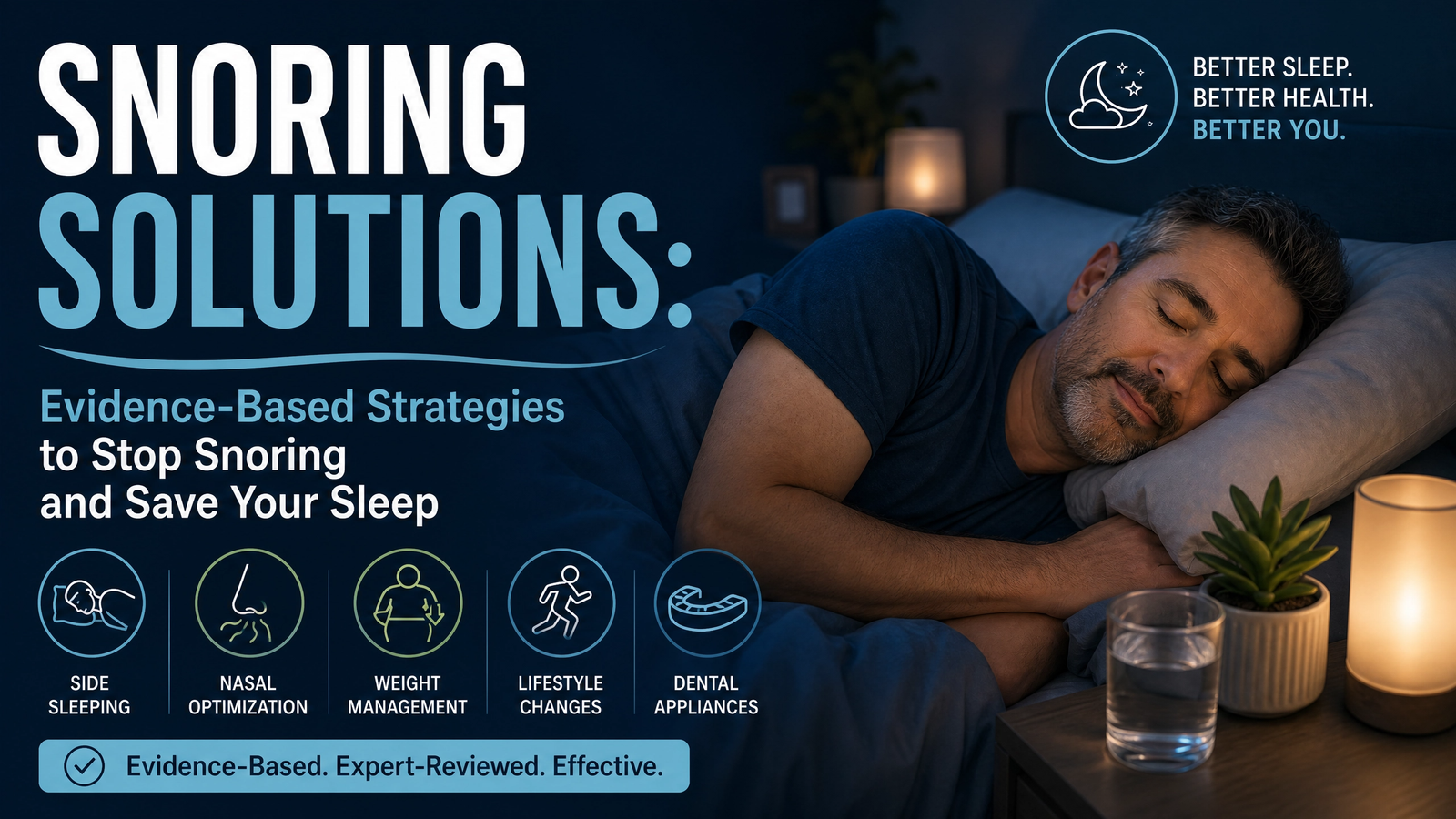

Snoring Solutions: Evidence-Based Strategies to Stop Snoring and Save Your Sleep |
Snoring Solutions: Evidence-Based Strategies to Stop Snoring and Save Your Sleep
A practical guide to oral appliances, positional therapy, nasal strips, exercises, and lifestyle changes that actually work
📖 A note from us → We spent weeks digging through the snoring research so you don’t have to. Here is what actually works: oral appliances for tongue-based snoring, nasal strips for congestion, positional therapy for back-sleepers, and exercises that strengthen the airway.
⚕️ Disclaimer: We are affiliate marketers, not doctors or sleep specialists. This guide is for educational purposes. Always consult a healthcare provider for persistent snoring or suspected sleep apnea.
📝 Editorial & Review Policy
This article was prepared by the DeepSleepAid editorial team based on publicly available research. While no individual medical professional has reviewed this specific article, all information is drawn from:
- Published peer-reviewed studies on snoring and its treatment (citations provided below)
- Clinical guidelines from the American Academy of Sleep Medicine
- Publicly available research from the NIH, PubMed Central, and academic medical centers
We have not personally reviewed original research data. This guide synthesizes publicly available information for educational purposes.
Always consult a licensed healthcare provider before starting any new treatment.
⚕️ Medical Disclaimer: This information is for educational purposes only and is not medical advice. Individual results vary. This page contains affiliate links. Consult your doctor before starting any new supplement or treatment, especially if you take medications or have a medical condition. These products are not intended to diagnose, treat, cure, or prevent any disease.
📑 Table of Contents
- Introduction: Why Snoring Is Not Just a Noise Problem
- Oral Appliances: The Most Effective Non-CPAP Solution
- Positional Therapy: Stop Snoring by Changing How You Sleep
- Nasal Strips, Drops, and Dilators: Opening the Airway
- Snoring Exercises: Strengthening the Airway
- Lifestyle Changes That Reduce Snoring
- 🎯 Snoring Solution Matcher
- 🧮 Snoring Severity Tracker
- Sleep Support Products
- Frequently Asked Questions
- About This Guide
Introduction: Why Snoring Is Not Just a Noise Problem
If you are searching for snoring solutions, you already know the frustration. Your partner nudges you. Your sleep is fragmented. You wake up with a dry mouth and a sore throat. And you may worry that snoring is a sign of something more serious—like sleep apnea.
The truth is, snoring affects approximately 45% of adults occasionally and 25% regularly. Men snore more than women, and snoring worsens with age and weight gain. But snoring is not just a relationship issue—it can be a marker of upper airway resistance that, if left untreated, may progress to more significant breathing problems.
This guide covers the full spectrum of snoring solutions, from simple lifestyle changes to medical devices and emerging therapies. Whether you snore occasionally or nightly, there is an evidence-based strategy that can help.
For a complete understanding of snoring and its connection to sleep apnea, see our main sleep apnea guide. For more sleep health information, explore our sleep hygiene guide.
Oral Appliances: The Most Effective Non-CPAP Solution
Oral appliances—also called mandibular advancement devices (MADs) or tongue-retaining devices—are among the most effective snoring solutions for tongue-based snoring. They work by either advancing the lower jaw forward or holding the tongue in a forward position, creating more space in the airway.
Mandibular Advancement Devices (MADs)
MADs are the most common type of oral appliance for snoring. They fit over the upper and lower teeth and gently pull the lower jaw forward, which pulls the tongue and soft palate away from the back of the airway. This increases airway space and reduces the vibration that causes snoring.
Custom-Fitted vs. Over-the-Counter
- Custom-fitted MADs: Made by a dentist or sleep specialist, these devices are more comfortable, provide better retention, and are more effective. They are recommended for moderate-to-severe snoring or suspected sleep apnea.
- Over-the-counter (OTC) devices: “Boil-and-bite” devices are cheaper but less effective and may cause jaw discomfort. They are suitable for occasional snoring or as a trial before investing in a custom device.
Effectiveness
Research suggests that oral appliances can reduce snoring intensity by 50-80% in appropriately selected patients. They are particularly effective for individuals with retrognathia (recessed jaw) or those who snore primarily from the tongue and soft palate.
Side Effects
- Excessive salivation or dry mouth
- Jaw or tooth discomfort (usually temporary)
- Morning bite changes (may resolve within 1-2 hours)
- Long-term tooth movement (requires regular dental follow-up)
Positional Therapy: Stop Snoring by Changing How You Sleep
For many people, snoring is significantly worse when sleeping on their back (supine position). When you lie on your back, gravity pulls the tongue and soft palate backward, narrowing the airway and increasing vibration. This is one of the simplest snoring solutions to implement.
How to Do Positional Therapy
- Body pillows: Help maintain side-sleeping position
- Positional pillows: Specially designed to encourage side-sleeping
- Backpack-style garments: Soft packs worn on the back to discourage back-sleeping
- Wearable vibratory devices: Alert you when you roll onto your back
Effectiveness
For patients with positional snoring (snoring that is significantly worse on the back), positional therapy can reduce snoring intensity by 50-70%. It is most effective for individuals with mild-to-moderate snoring and no significant sleep apnea.
Nasal Strips, Drops, and Dilators: Opening the Airway
If your snoring is caused by nasal congestion or narrow nasal passages, nasal solutions may be the most effective snoring solutions for you. These non-invasive devices work by physically opening the nasal passages or reducing congestion.
Nasal Strips
Adhesive strips applied across the bridge of the nose pull the nostrils open, increasing airflow through the nasal passages. They are inexpensive, non-invasive, and can be effective for mild-to-moderate nasal obstruction.
Nasal Dilators
These are small devices inserted into the nostrils to hold them open. They are available in various sizes and shapes and may be more effective than strips for some individuals.
Nasal Sprays and Rinses
Saline rinses or corticosteroid nasal sprays can reduce nasal congestion and inflammation. These are particularly helpful for individuals with allergies or chronic sinusitis.
Effectiveness
Nasal strips and dilators can reduce snoring intensity by 20-40% in individuals with nasal obstruction. However, they do not address snoring from the throat or tongue and are rarely sufficient as a standalone treatment for moderate-to-severe snoring.
Snoring Exercises: Strengthening the Airway
Research suggests that exercises to strengthen the muscles of the tongue, soft palate, and upper airway can reduce snoring. These exercises—sometimes called oropharyngeal exercises or myofunctional therapy—are among the most natural snoring solutions available.
Key Exercises
- Tongue slide: Slide the tongue back along the roof of the mouth 10-15 times
- Palate press: Press the tongue against the hard palate and hold for 30 seconds
- Vowel pronunciation: Say “a, e, i, o, u” loudly and clearly 10-15 times
- Singing: Singing exercises the soft palate and upper airway muscles
- Didgeridoo playing: Some studies suggest playing the didgeridoo strengthens airway muscles
Effectiveness
A systematic review found that oropharyngeal exercises can reduce snoring frequency and intensity in some individuals. Benefits may take 2-4 weeks of consistent practice to become noticeable.
Lifestyle Changes That Reduce Snoring
Lifestyle interventions are among the most cost-effective snoring solutions with no side effects. They address the root causes of snoring, such as excess weight, alcohol consumption, and nasal congestion.
Weight Loss
Excess weight, particularly around the neck, compresses the airway and increases snoring. A 5-10% reduction in body weight can significantly reduce snoring intensity and frequency.
Alcohol and Sedative Reduction
Alcohol and sedatives relax upper airway muscles, worsening snoring. Avoid alcohol within 4 hours of bedtime and discuss any sedative medications with your prescriber.
Smoking Cessation
Smoking increases inflammation and fluid retention in the upper airway. Quitting smoking may reduce airway edema and improve snoring over time.
Sleep Position
Side-sleeping is one of the most effective snoring solutions. Use pillows or positional devices to maintain side-sleeping throughout the night.
Regular Exercise
Regular physical activity—even independent of weight loss—may improve upper airway muscle tone and reduce snoring.
🎯 Snoring Solution Matcher
Find the best snoring solution for your specific profile
1. What is the primary cause of your snoring?
2. How often do you snore?
3. Do you have dental or jaw issues?
4. What is your primary goal?
Your Personalized Snoring Solution Recommendations
🧮 Snoring Severity Tracker
Track your snoring to monitor improvement over time
Your Snoring Severity Assessment
🔗 Affiliate Disclosure: We earn a commission if you purchase through this link, at no extra cost to you.
🌙 Sleep Restore Pro
A natural sleep support formula that may help you fall asleep faster and support restful sleep while addressing snoring.
According to the manufacturer, Sleep Restore Pro combines calming botanicals and essential minerals to support your body’s natural sleep-wake cycle. The formula may help reduce nighttime awakenings and promote a sense of calm before bed.
- May help reduce time to fall asleep
- Supports deeper sleep cycles
- Contains calming botanical extracts
- Designed for adults with sleep difficulties
Claims about this specific product are based on manufacturer-provided information. Individual results vary. This product is not intended to diagnose, treat, cure, or prevent any disease.
🔗 Affiliate Disclosure: We earn a commission if you purchase through this link, at no extra cost to you.
💤 Dream Deep Complex
A premium sleep formula designed to support deep, uninterrupted sleep cycles and improve overall sleep quality.
According to the manufacturer, Dream Deep Complex focuses on enhancing sleep quality rather than just helping you fall asleep. The formula contains ingredients that may support stable sleep architecture throughout the night.
- Supports deep, uninterrupted sleep cycles
- May help maintain stable sleep architecture
- Designed to reduce nighttime awakenings
- Contains ingredients that support neurotransmitter production
Claims about this specific product are based on manufacturer-provided information. Individual results vary. This product is not intended to diagnose, treat, cure, or prevent any disease.
Frequently Asked Questions About Snoring Solutions
The most effective snoring solutions depend on the cause. Oral appliances (mandibular advancement devices) are highly effective for tongue-based snoring. Positional therapy works for back-sleepers. Nasal strips and dilators help with nasal congestion. Lifestyle changes—weight loss, alcohol reduction, and side-sleeping—address root causes. For many people, a combination of approaches yields the best results.
Yes. Many people find effective snoring solutions without CPAP. Oral appliances, positional therapy, nasal devices, and lifestyle changes can significantly reduce or eliminate snoring in many cases. If you have mild-to-moderate snoring without sleep apnea, these alternatives are often sufficient. If snoring is accompanied by sleep apnea, treatment should address both conditions.
Research suggests that oropharyngeal exercises—which strengthen the tongue, soft palate, and upper airway—can reduce snoring frequency and intensity. Benefits typically require 2-4 weeks of consistent daily practice. They are most effective for mild-to-moderate snoring and are often used in combination with other snoring solutions.
No. While loud, chronic snoring is a common symptom of sleep apnea, most snorers do not have apnea. Simple snoring involves vibration without breathing pauses. However, if snoring is accompanied by witnessed apneas, gasping, or excessive daytime sleepiness, you should be evaluated for sleep apnea. Up to 75% of habitual snorers may have some form of sleep-disordered breathing .
Side-sleeping is the best position to stop snoring for most people. When you sleep on your back, gravity pulls the tongue and soft palate backward, narrowing the airway. Side-sleeping keeps the airway more open. Use a body pillow or positional device to maintain side-sleeping throughout the night.
📚 About This Guide
This guide was created by the DeepSleepAid editorial team using information drawn from publicly available sources, including:
- Peer-reviewed studies on snoring and its treatment (citations provided throughout)
- Clinical guidelines from the American Academy of Sleep Medicine
- Publicly available research from the NIH, PubMed Central, and academic medical centers
We have not personally reviewed original research data. This guide synthesizes publicly available information for educational purposes.
We do not accept payment for positive reviews. Product recommendations are based on ingredient quality, dosing transparency, and alignment with published sleep research. This guide is updated periodically as new information becomes available.