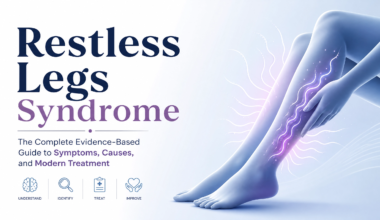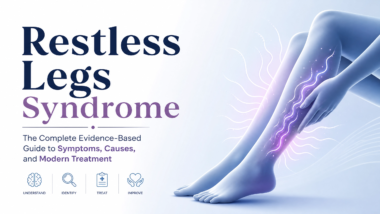

Restless Leg Syndrome: The Definitive Evidence-Based Guide
Master the complexities of Willis-Ekbom Disease with clinical insights, interactive assessment tools, and evidence-based treatment protocols
What Is Restless Leg Syndrome?
Restless Leg Syndrome (RLS), clinically termed Willis-Ekbom Disease, is a neurological sensorimotor disorder affecting 5-15% of the population. Characterized by an irresistible urge to move the legs accompanied by deeply unpleasant sensations, this condition significantly impacts sleep quality and daily functioning.
Recognizing RLS Symptoms
The International Restless Legs Syndrome Study Group has established five essential diagnostic criteria. Understanding these criteria helps distinguish RLS from other conditions including nocturnal leg cramps, peripheral neuropathy, and positional discomfort.
- An urge to move the legs, usually with uncomfortable sensations (crawling, pulling, throbbing)
- Symptoms begin or worsen during rest or inactivity
- Movement provides partial or complete relief
- Symptoms worsen in the evening or at night
- Symptoms are not solely accounted for by another medical condition
Interactive Clinical Assessment Tools
📊 IRLS Clinical Severity Calculator
Based on the validated IRLSSG Severity Scale
Symptom Intensity (0-40)
Impact & Frequency (0-40)
🩸 Iron Deficiency Risk & Dosing Calculator
Laboratory Values (if known)
Risk Factors
Frequently Asked Questions
What is the main cause of restless leg syndrome?
The primary cause involves dysfunction in basal ganglia circuits related to dopamine regulation and brain iron metabolism. Brain iron deficiency disrupts dopamine signaling. Genetic factors account for approximately 50-60% of primary cases.
How is RLS severity measured?
Clinicians use the International Restless Legs Syndrome Study Group Severity Scale (IRLS), a validated 10-item questionnaire scoring symptoms from 0 to 40. Scores of 1-10 indicate mild, 11-20 moderate, 21-30 severe, and 31-40 very severe disease.
What iron level is optimal for RLS?
Clinical guidelines recommend maintaining serum ferritin above 75-100 ng/mL for optimal symptom management. Transferrin saturation should exceed 20%.
Is there a cure for RLS?
Currently, no cure exists for primary idiopathic RLS. However, secondary RLS from iron deficiency or medication side effects may resolve when the underlying cause is treated.