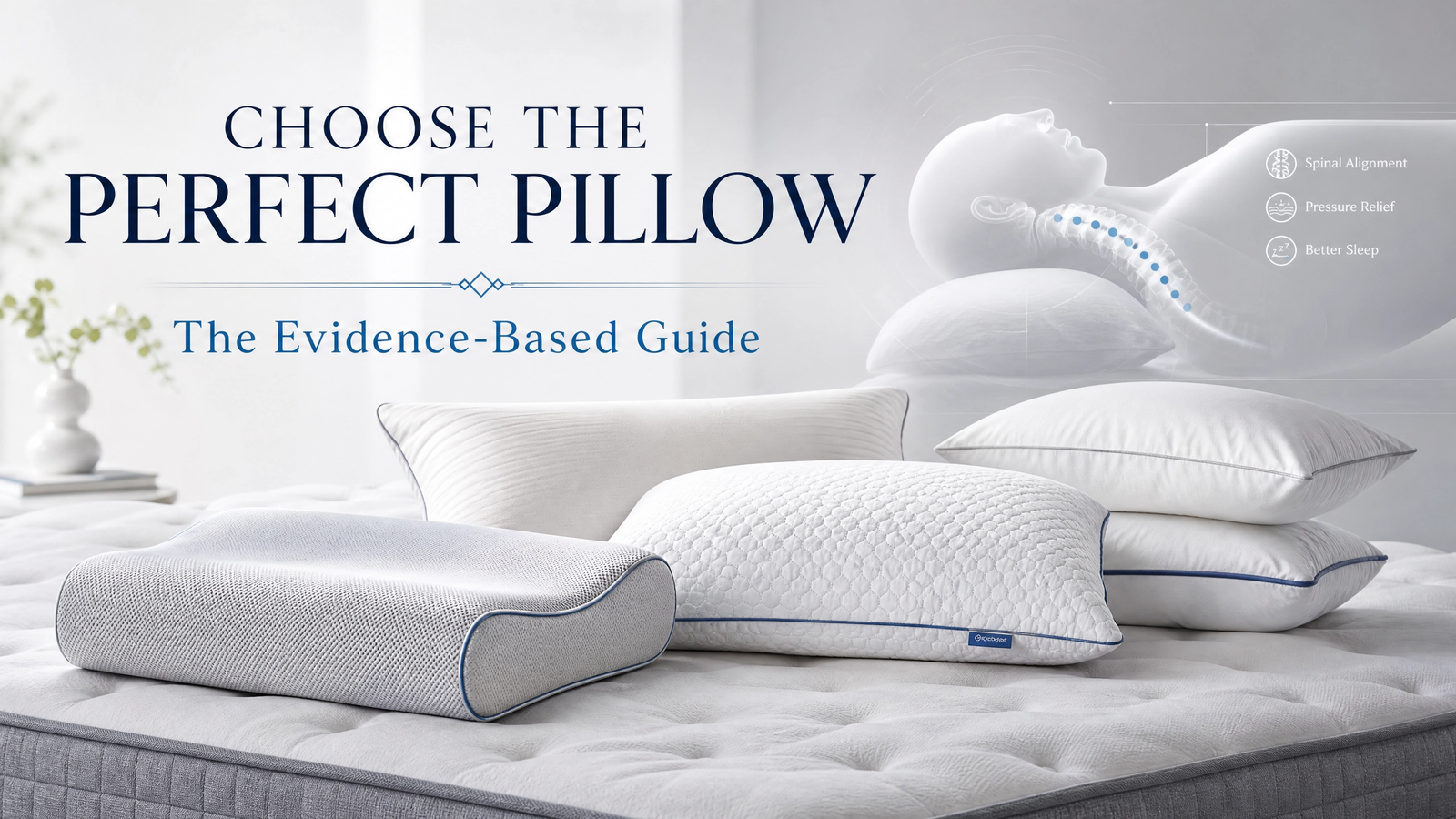

How to Choose the Perfect Pillow for Better Sleep: Evidence-Based Guide
A science-backed guide to selecting the best pillow for your sleep position, body type, and comfort preferences
📖 A note from us → We spent weeks digging through the research on pillows and sleep quality so you don’t have to. Here is what actually works: matching pillow loft to your sleep position, choosing the right material for your body type, and knowing when to replace your pillow.
⚕️ Disclaimer: We are affiliate marketers, not doctors. This guide is for educational purposes. If you have chronic neck pain or suspected sleep apnea, consult a healthcare provider.
📝 Editorial & Review Policy
This article was prepared by the DeepSleepAid editorial team based on publicly available research. While no individual medical professional has reviewed this specific article, all information is drawn from:
- Published peer-reviewed studies accessible via PubMed (citations provided below)
- Clinical guidelines from the National Sleep Foundation and the American Chiropractic Association
- Publicly available educational materials from the NIH, Sleep Foundation, and academic journals
We have not personally reviewed original research data. This guide synthesizes publicly available information for educational purposes.
Always consult a licensed healthcare provider before making any health decisions.
⚕️ Medical Disclaimer: This information is for educational purposes only and is not medical advice. The supplements mentioned have not been evaluated by the FDA. Individual results vary. This page contains affiliate links. Consult your doctor before starting any new supplement, especially if you have chronic neck pain, spinal conditions, or suspected sleep apnea. These products are not intended to diagnose, treat, cure, or prevent any disease.
⚠️ Important: If you experience chronic neck pain, numbness or tingling in your arms, or suspect you may have sleep apnea (loud snoring with breathing pauses), consult a healthcare provider. A pillow alone cannot treat these conditions.
Why Your Pillow for Better Sleep Matters More Than You Think
If you wake up with neck stiffness, shoulder pain, or tension headaches, your pillow for better sleep may be the culprit. Most people spend considerable time and money selecting the right mattress, yet give little thought to the pillow that supports their head for one-third of every day. Research suggests this oversight may be costing millions of people the restorative sleep they need.
A systematic review published in the Journal of Integrative Medicine found that there is moderate evidence that specific pillow parameters can significantly improve sleep quality, spinal alignment, and reduce waking neck pain. The right pillow for better sleep does more than just feel comfortable—it actively supports your body’s natural alignment during the most vulnerable hours of the day.
A landmark field trial published in Physiotherapy Canada examined 106 participants sleeping on their own pillows over seven consecutive nights. The results were striking: over 50 percent of participants reported regular waking symptoms, uncomfortable pillows, or poor-quality sleep. Only 42.5 percent woke without any symptoms at all. The study concluded that many participants had made poor pillow choices, as poor sleep quality, low pillow comfort, and waking symptoms were common.
Poor cervical posture during sleep places excessive stress on cervical spine structures, which can increase waking symptoms including neck and shoulder pain, tension headaches, and muscular stiffness. The right pillow for better sleep promotes the natural lordotic curve of the cervical spine, which researchers believe is essential for inducing longer periods of deep sleep.
If you have already optimized your sleep hygiene tips and bedtime routine, your pillow may be the missing piece of the puzzle.
Understanding Pillow Anatomy: What Makes a Pillow Work
Before diving into specific pillow types, it helps to understand the key characteristics that determine how a pillow performs. These factors interact to create your overall sleep experience.
Loft (Height)
Loft refers to the height of the pillow when it is not compressed by your head. The systematic review of pillow designs found that a pillow height between 7 and 11 centimeters (approximately 2.75 to 4.3 inches) for the unloaded central part yielded the highest comfort ratings, reduced cervical and cranial pressure, reduced cervical muscle activation, and promoted optimal spinal alignment. However, the ideal loft depends heavily on your sleep position and body frame.
Firmness and Support
Firmness determines how much resistance the pillow provides against compression. A pillow that is too soft allows your head to sink too deeply, potentially misaligning your spine. A pillow that is too firm creates pressure points and fails to cradle the natural curves of your neck. The goal is a balance: enough support to maintain alignment, enough give to prevent pressure buildup.
Material and Fill
The material inside your pillow determines its breathability, durability, allergen resistance, and how it responds to pressure. Common fill materials include memory foam, latex, down and feathers, polyester fibers, buckwheat hulls, and various specialty materials. Each has distinct properties that affect sleep temperature, support characteristics, and longevity.
Shape and Contouring
Traditional rectangular pillows are the most common, but contoured or ergonomic pillows are designed with specific shapes to support the cervical spine. A contoured pillow design with higher sides to accommodate side sleepers and a lower, flattened middle to accommodate back sleepers has shown evidence of improving sleep comfort and spinal alignment.
Thermal Properties
Your head releases significant heat during sleep. A pillow that traps heat can cause discomfort, night sweats, and frequent awakenings. Research indicates that a cooling surface can promote sleep quality by lowering body temperature, reducing sweating, and slowing heart rate, thereby enabling deeper sleep. Materials with open cell structures, such as latex, generally allow better airflow than denser materials like traditional memory foam.
The Science of Pillow Materials: What Research Says
Not all pillow materials are created equal. The Physiotherapy Canada study examined pillow performance by material type and found significant differences in user satisfaction and sleep quality outcomes.
Latex Pillows
Latex pillows emerged as the standout performer in multiple research studies. The systematic review concluded that latex pillow material currently has the greatest evidence in improving sleep comfort and quality, decreasing neck pain, and improving overall function. Latex is derived from the sap of rubber trees and whipped into a foam structure. It offers a unique combination of resilient support and breathability due to its open cell structure. Unlike memory foam, which can trap heat, latex allows air to circulate freely, helping regulate body temperature throughout the night. Latex pillows are also naturally hypoallergenic and resistant to dust mites, making them suitable for allergy sufferers.
Memory Foam Pillows
Memory foam pillows are made from viscoelastic polyurethane foam that responds to body heat and pressure, molding to the shape of your head and neck. This conforming property can provide excellent pressure relief and support. However, traditional memory foam comprises thousands of tiny holes that absorb heat exceptionally well, allowing for minimal airflow or breathability. Newer formulations, including gel-infused and open-cell memory foams, attempt to address this limitation. Memory foam pillows are generally recommended for side and back sleepers who need contouring support.
Down and Feather Pillows
Down and feather pillows are among the oldest and most traditional options. They offer a soft, sink-in surface that many find luxurious. However, the Physiotherapy Canada study found that feather pillow users provided consistently low reports of pillow comfort and sleep quality compared to other materials. Down and feather pillows can flatten over time, losing their supportive properties. They are also not hypoallergenic and may trigger symptoms in people with allergies or asthma.
Polyester and Synthetic Fiber Pillows
Polyester pillows were the most popular choice among participants in the Physiotherapy Canada study, with 58.9 percent of inspected pillows being polyester-filled. Users of polyester and latex pillows rated their sleep quality and pillow comfort consistently high. Polyester pillows are affordable, hypoallergenic, and easy to wash. They offer a medium level of support that works for many sleepers. However, they may flatten or clump over time and typically need replacement more frequently than higher-quality materials.
Matching Your Pillow to Your Sleep Position
Your preferred sleep position is the single most important factor in choosing the right pillow for better sleep. Each position places different demands on your cervical spine and requires specific support characteristics to maintain neutral alignment.
Side Sleepers
Side sleeping is the most common position, preferred by approximately 60 percent of adults. When sleeping on your side, the distance between your head and the mattress is greatest, requiring a pillow with sufficient loft to fill the gap between your shoulder and neck. A pillow that is too flat causes your head to tilt downward, straining the neck. A pillow that is too high forces your head upward, creating a similar misalignment. The ideal side sleeper pillow should be firm enough to maintain its height under the weight of your head while cradling your neck curve.
Back Sleepers
Back sleepers need a pillow that supports the natural curve of the cervical spine without pushing the head too far forward. A medium-loft pillow, typically between 3 to 5 inches, often works best. The pillow should be thinner in the center where the head rests and slightly thicker under the neck to support the lordotic curve. If a back sleeper uses a pillow that is too thick, the chin tilts toward the chest, compressing the airway and potentially contributing to snoring.
Stomach Sleepers
Stomach sleeping is generally considered the least optimal position for spinal health because it requires rotating the head to one side, which twists the cervical spine. However, if you are committed to stomach sleeping, choosing the right pillow for better sleep can minimize strain. Stomach sleepers need the thinnest pillow possible, or in some cases, no pillow at all under the head.
Combination Sleepers
If you change positions throughout the night, you need a versatile pillow that performs adequately in multiple positions. Adjustable pillows, which allow you to add or remove fill to customize loft, are ideal for combination sleepers. Shredded memory foam or latex pillows offer a balance of conforming support and adjustability.
Pillow Height and Spinal Alignment: The Critical Connection
The height of your pillow for better sleep, or loft, is perhaps the most critical variable in maintaining spinal alignment during sleep. The systematic review of pillow designs found that a pillow height between 7 and 11 centimeters for the unloaded central part was associated with the highest comfort ratings and optimal spinal alignment. But what does this mean in practice?
When you lie down, your spine should maintain the same neutral alignment it has when standing upright with good posture. The pillow should fill the space between your head and the mattress while supporting the natural curve of your neck. If the pillow is too high, your neck flexes forward, compressing the cervical vertebrae and straining muscles. If the pillow is too low, your neck extends backward, creating a similar strain. Both scenarios can lead to waking pain, stiffness, and reduced sleep quality.
Your body frame also affects ideal pillow height. People with broader shoulders typically need higher-loft pillows when side sleeping because the distance between their head and the mattress is greater. Conversely, people with narrower frames or smaller heads may need lower loft to maintain alignment.
Special Considerations: Allergies, Temperature, and Pain Relief
Beyond sleep position and material, several special considerations may influence your ideal pillow for better sleep.
Hypoallergenic and Anti-Allergy Options
For allergy sufferers and people with asthma, pillow fill can significantly impact sleep quality. Dust mites thrive in warm, humid environments like pillows, and their droppings are a common allergen. Natural-filled pillows, such as down and feather, are not anti-allergy. Hypoallergenic pillows filled with synthetic or polyester fibers have much tighter pore sizes than natural materials. Latex pillows are also naturally hypoallergenic. If allergies disrupt your sleep, look for pillows specifically labeled as hypoallergenic.
Temperature Regulation and Cooling
Sleeping hot is a common complaint that can cause frequent awakenings and reduce time spent in deep sleep. Traditional memory foam tends to retain heat due to its dense structure. Latex, with its open cell structure, allows better airflow. If you are a warm sleeper, prioritize pillows marketed as cooling or temperature-neutral.
Neck Pain and Orthopedic Support
If you experience chronic neck pain, an orthopedic or cervical pillow may be worth considering. Research suggests that foam contour pillows produce consistently lower frequencies of waking cervical pain than foam regular or feather pillows. If you have persistent neck pain, consult a physiotherapist or healthcare provider for personalized recommendations.
Snoring and Sleep Apnea
Pillow choice can influence snoring and mild sleep apnea. Elevating the head can help keep airways open. However, if you suspect sleep apnea—characterized by loud snoring, witnessed breathing pauses, and excessive daytime sleepiness—consult a healthcare provider. A pillow for better sleep alone cannot treat moderate to severe sleep apnea. See our obstructive sleep apnea guide for more information.
Pillow Care, Longevity, and When to Replace
Even the best pillow for better sleep will lose its supportive properties over time. Knowing when to replace your pillow and how to care for it can extend its lifespan and protect your sleep quality.
How Often Should You Replace Your Pillow?
Most sleep experts recommend replacing pillows every 1 to 2 years. Over time, pillows accumulate dust mites, dead skin cells, and body oils. They also lose their shape and supportive structure. The fold test is a simple way to check if your pillow needs replacement: fold it in half lengthwise. If it does not spring back to its original shape, the support is gone and it is time for a new pillow for better sleep.
Cleaning and Maintenance
Most down, feather, and polyester pillows can be machine washed. Memory foam and latex pillows should not be machine washed; spot clean them with warm water and mild detergent, then air dry completely. Using a pillow protector beneath your pillowcase can reduce the need for frequent washing and extend the pillow’s life.
1. What is your primary sleep position?
1. How old is your current pillow?
🔗 Affiliate Disclosure: We earn a commission if you purchase through this link, at no extra cost to you.
For individuals who have optimized their pillow for better sleep but still need additional support for sleep onset and relaxation, Sleep Restore Pro offers a natural sleep formula designed to complement your sleep hygiene efforts. This supplement contains magnesium glycinate, L-theanine, 5-HTP, ashwagandha KSM-66, and glycine—ingredients that research suggests may support the body’s natural sleep processes.
Important: This product is NOT a treatment for sleep disorders. It is intended as a sleep quality adjunct for individuals with generally healthy sleep patterns who want additional support alongside their pillow for better sleep and sleep hygiene practices. The manufacturer offers a 60-day satisfaction guarantee.
Claims about this specific product are based on manufacturer-provided information. Individual results vary. This product does not treat, cure, or prevent any sleep disorder.
Check Current Pricing & Availability →This is an affiliate link. We only recommend products we have independently evaluated. Your purchase supports our research at no additional cost to you.
🔗 Affiliate Disclosure: We earn a commission if you purchase through this link, at no extra cost to you.
For individuals who experience frequent awakenings, light sleep that feels unrefreshing, or difficulty maintaining sleep throughout the night—even with the right pillow for better sleep—Dream Deep Complex offers a more potent formulation, according to the manufacturer. This formula focuses on sleep architecture and maintaining deep sleep cycles.
Critical note: This product contains melatonin and should NOT be used as a substitute for medical evaluation if you suspect a sleep disorder. It is intended only for general sleep quality support alongside a healthy pillow for better sleep and sleep hygiene practices.
Contraindications: Not suitable for individuals under 18, pregnant or breastfeeding women, or those taking immunosuppressive medications. Always consult your healthcare provider before adding any supplement to your regimen.
Claims about this specific product are based on manufacturer-provided information. Individual results vary. This product does not treat, cure, or prevent any sleep disorder.
View Dream Deep Complex Details →This is an affiliate link. We independently evaluate all recommended products. Consult a healthcare professional before use.
For more information on natural sleep support, see our complete guide to deep sleep supplements and breathing exercises for sleep.
Frequently Asked Questions About Choosing a Pillow for Better Sleep
Most experts recommend replacing pillows every 1 to 2 years. Over time, pillows accumulate dust mites, dead skin cells, and body oils while losing their supportive structure. The fold test is a quick way to check: fold your pillow in half. If it does not spring back, it is time for a new pillow for better sleep. Research indicates that polyester, foam contour, and latex pillows tend to last longer than feather or regular foam pillows.
Pillows with supportive foam bases, such as memory foam or contour pillows, are generally best for neck pain because they provide cushioning while keeping the head and neck in proper alignment. Research suggests that foam contour and latex pillows produce consistently lower frequencies of waking cervical pain than feather or regular foam pillows. The ideal pillow for better sleep for neck pain depends on your sleep position.
Neither is universally better—it depends on your sleep position. Side sleepers generally need firmer pillows to fill the gap between shoulder and neck. Back sleepers often do well with medium-firm pillows that support the cervical curve. Stomach sleepers typically need the softest, thinnest pillows to prevent neck arching. The key is matching firmness to your position and body frame to maintain neutral spinal alignment with your pillow for better sleep.
Yes, research indicates that poor pillow support can contribute to tension headaches. The Physiotherapy Canada study found that poor sleep quality was significantly related to waking headache reports. When your pillow for better sleep fails to support proper cervical alignment, neck muscles remain tense throughout the night, which can trigger tension headaches upon waking.
Side sleepers generally need the highest pillow loft to fill the space between the shoulder and the side of the head. Research suggests that a pillow height between 7 and 11 centimeters (approximately 2.75 to 4.3 inches) promotes optimal spinal alignment. However, broader shoulders require higher loft. Your pillow for better sleep should be high enough to keep your head level with your spine.
Quality pillows typically cost more because they use better materials and construction, but the highest price does not always mean the best fit for you. Research suggests that latex and foam contour pillows, which often fall in the mid-to-premium price range, provide better sleep quality and longevity than budget options. However, some affordable polyester pillows also perform well. A quality pillow for better sleep that lasts 2-3 years may cost less per night than a cheap pillow that needs frequent replacement.
Yes, the right pillow for better sleep can help reduce snoring in some cases. Anti-snore pillows are designed to encourage side sleeping or elevate the head to keep airways open. However, if snoring is severe or accompanied by gasping or choking, consult a healthcare provider, as these may be signs of sleep apnea, which requires medical treatment. See our sleep apnea guide for more information.
Latex pillows are generally the best choice for hot sleepers due to their open cell structure, which allows excellent airflow. Some memory foam pillows now incorporate cooling technologies such as gel infusions, copper fibers, or phase-change materials. Buckwheat hull pillows offer excellent airflow but are very firm. Avoid traditional dense memory foam and down pillows if you sleep hot, as they tend to retain heat.
About This Guide
This guide was prepared by the DeepSleepAid editorial team based on publicly available research. The information presented draws from:
- Peer-reviewed studies accessible via PubMed (citations provided throughout)
- Clinical guidelines from the National Sleep Foundation and the American Chiropractic Association
- Publicly available educational materials from the Sleep Foundation, Physiotherapy Canada, and academic journals
- Manufacturer-provided information for any recommended supplemental products
We have not personally reviewed original research data. This guide synthesizes publicly available information for educational purposes.
We do not accept payment for positive reviews. All information reflects the current state of publicly available knowledge as of June 2026. This guide is updated periodically to reflect new research findings.
Always consult a licensed healthcare provider for personalized medical advice, diagnosis, and treatment.
📚 References and Further Reading
This guide was prepared based on publicly available research from the following sources:
- Physiotherapy Canada — Your Pillow May Not Guarantee a Good Night’s Sleep: PMC3076923
- Journal of Integrative Medicine — Effect of Different Pillow Designs on Sleep Comfort: ScienceDirect
- Sleep Foundation — Best Pillows of 2026: www.sleepfoundation.org/best-pillows
- National Institute of Neurological Disorders and Stroke — Low Back Pain Fact Sheet: www.ninds.nih.gov
For personalized medical advice, always consult a qualified healthcare provider.
⚕️ Medical Disclaimer
The information provided in this article is for educational and informational purposes only. It is not intended to be a substitute for professional medical advice, diagnosis, or treatment. Always seek the advice of your physician or other qualified health provider with any questions you may have regarding a medical condition or before starting any new supplement or sleep practice.
Never disregard professional medical advice or delay in seeking it because of something you have read on this website. The statements regarding dietary supplements have not been evaluated by the Food and Drug Administration or equivalent regulatory bodies. These products are not intended to diagnose, treat, cure, or prevent any disease.
Individual results may vary. The content on DeepSleepAid.com is based on publicly available research and does not constitute medical advice. If you are experiencing persistent neck pain, sleep difficulties, or suspect you may have sleep apnea, consult a licensed healthcare professional or sleep specialist.