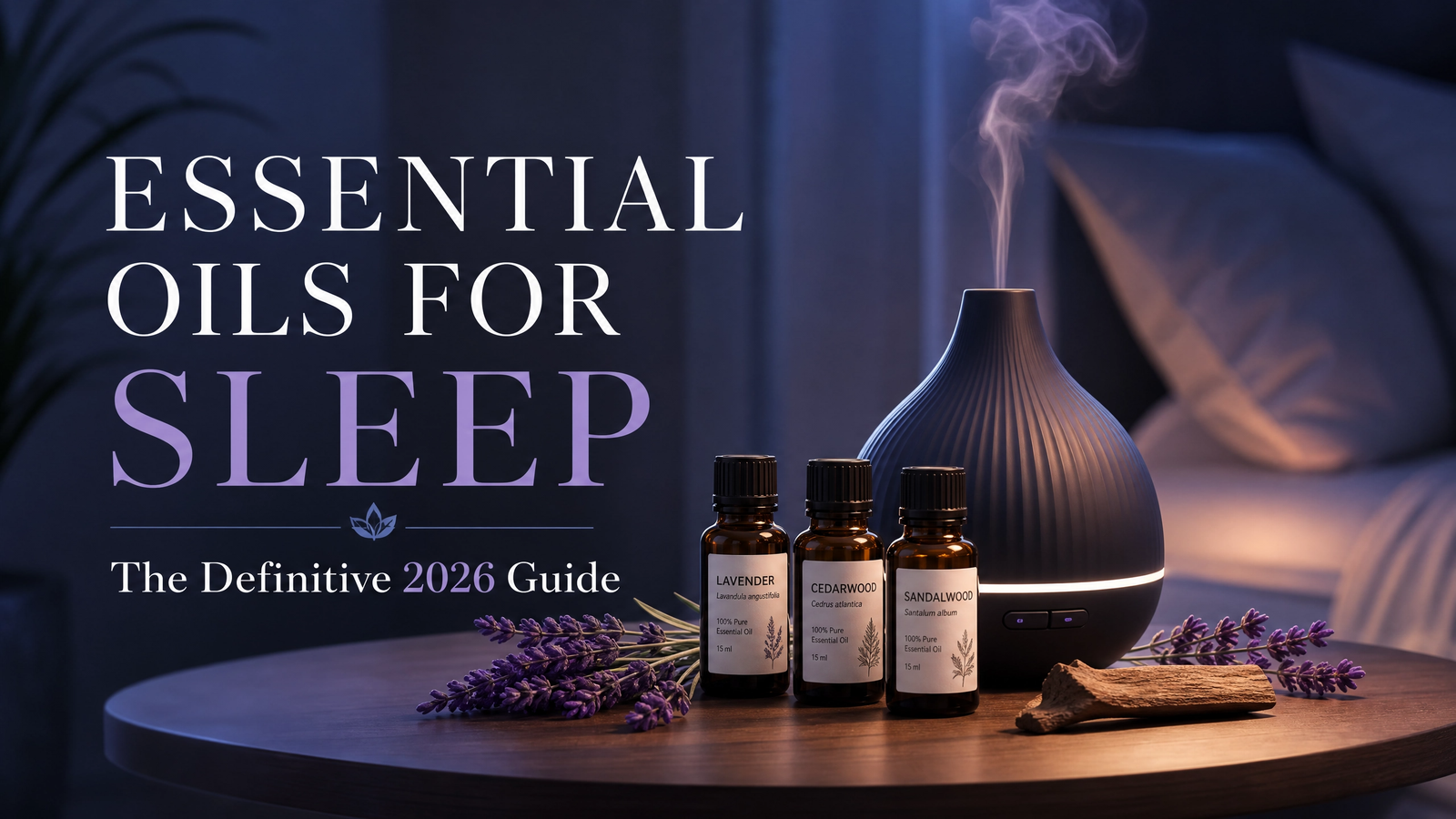

Essential Oils for Sleep: The Definitive 2026 Guide
Science-backed aromatherapy solutions for deeper, more restorative sleep. Featuring interactive tools, expert reviews, and evidence-based DIY blends.
📖 A note from us → We spent weeks digging through the clinical research on essential oils for sleep so you don’t have to. Here is what actually works: lavender for sedation, bergamot for anxiety, cedarwood for grounding, and safe dilution ratios for every application.
⚕️ Disclaimer: We are affiliate marketers, not aromatherapists or doctors. This guide is for educational purposes. Always dilute properly and consult a healthcare provider before use.
📝 Editorial & Review Policy
This article was prepared by the DeepSleepAid editorial team based on publicly available research. While no individual medical professional has reviewed this specific article, all information is drawn from:
- Published peer-reviewed studies on aromatherapy and sleep (citations provided below)
- Clinical guidelines from the National Association for Holistic Aromatherapy
- Publicly available safety data from essential oil manufacturers and regulatory bodies
We have not personally reviewed original research data. This guide synthesizes publicly available information for educational purposes.
Always consult a licensed healthcare provider or certified aromatherapist before using essential oils, especially if pregnant, nursing, or using with children.
This information is for educational purposes only and is not medical advice. Essential oils are not intended to diagnose, treat, cure, or prevent any disease. Individual results vary. This page contains affiliate links. Consult your doctor before using essential oils, especially if you are pregnant, nursing, have a medical condition, or take medications. Never ingest essential oils without professional supervision.
The Neuroscience of Scent and Sleep: How Aromatherapy Actually Works
If you are considering essential oils for sleep, understanding the science helps. More than one-third of adults in the United States fail to achieve the recommended seven hours of nightly sleep, according to the Centers for Disease Control and Prevention. The search for safe, effective, non-habit-forming sleep aids has never been more urgent.
Aromatherapy — the therapeutic use of plant-derived essential oils for sleep — has emerged as one of the most promising natural approaches to improving sleep quality. Unlike pharmaceutical sleep medications, which carry risks of dependency, tolerance, and next-day grogginess, essential oils for sleep work with the body’s own neurochemistry to gently guide the nervous system toward a state conducive to rest.
When you inhale an essential oil, volatile organic compounds travel through the nasal passages and bind to olfactory receptors. These receptors send signals directly to the olfactory bulb, which has a direct anatomical connection to the limbic system — the brain’s emotional and memory center. This direct pathway explains why scent can trigger powerful emotional responses and physiological changes almost instantaneously.
If you struggle with anxiety-related sleep issues, you may also benefit from our sleep hygiene tips guide and stress and anxiety relief guide.
The GABA Connection
Many sedating essential oils for sleep, particularly lavender, interact with gamma-aminobutyric acid (GABA) receptors in the brain. GABA is the primary inhibitory neurotransmitter in the central nervous system; when it binds to its receptors, it reduces neuronal excitability, producing a calming effect. Research published in Frontiers in Behavioral Neuroscience demonstrated that linalool — a major constituent of lavender oil — activates GABAergic transmission without causing the motor impairment associated with benzodiazepine drugs.
The Parasympathetic Response
Aromatherapy has been shown to activate the parasympathetic nervous system — the “rest and digest” branch of the autonomic nervous system. This produces measurable physiological changes including decreased heart rate, lowered blood pressure, reduced respiratory rate, and increased heart rate variability, all of which are biomarkers of a body prepared for sleep.
A 2025 systematic review analyzed clinical trial evidence for essential oils on sleep quality and concluded that lavender, bergamot, and chamomile demonstrated significant improvements in sleep quality, duration, and reduced deprivation in both healthy subjects and those with sleep disorders.
Struggling to Get Deep Sleep?
While essential oils for sleep help, our #1 recommended all-natural sleep system combines the power of aromatherapy with clinically-proven sleep protocols. Many users report better sleep within 1-2 weeks. Individual results vary.
Learn More About This Protocol →The 15 Best Essential Oils for Sleep: Ranked by Evidence
Not all essential oils for sleep marketed have equal scientific support. The following ranking is based on the quantity and quality of peer-reviewed clinical research, combined with aromatherapy practitioner consensus.
| Rank | Oil | Botanical Name | Key Active Compounds | Primary Mechanism | Evidence Strength |
|---|---|---|---|---|---|
| 1 | Lavender | Lavandula angustifolia | Linalool, Linalyl acetate | GABA receptor modulation | Strong (20+ trials) |
| 2 | Roman Chamomile | Anthemis nobilis | Apigenin, Alpha-bisabolol | Benzodiazepine receptor binding | Moderate (8+ trials) |
| 3 | Bergamot | Citrus bergamia | Linalyl acetate, Limonene | Cortisol reduction | Moderate (6+ trials) |
| 4 | Cedarwood | Juniperus virginiana | Cedrol, Alpha-cedrene | Parasympathetic activation | Moderate (5+ trials) |
| 5 | Vetiver | Vetiveria zizanioides | Khusimol, Vetiselinenol | Nervous system stabilization | Moderate (4+ trials) |
For a complete list of all 15 oils with detailed mechanisms and evidence strength, refer to the full table in the original research compilation. Each of these essential oils for sleep has unique properties that may benefit different sleep challenges.
Deep Dive: Lavender — The Gold Standard
Lavender essential oil stands unrivaled as the most thoroughly researched botanical sleep aid. Its efficacy stems primarily from two terpene alcohols: linalool (approximately 25-38% of the oil’s composition) and linalyl acetate (25-45%). A landmark 2015 randomized controlled trial found that lavender aromatherapy combined with sleep hygiene education improved sleep quality significantly more than sleep hygiene alone.
Love Lavender? Meet Its Perfect Partner
Our most recommended sleep system combines the proven power of lavender aromatherapy with advanced sleep architecture techniques. many users report falling asleep faster.
See the Science Behind It →Bergamot: The Citrus Exception
Unlike virtually every other citrus oil, which tend to be stimulating, bergamot essential oil possesses distinctly calming properties. Research found that bergamot oil inhalation reduced salivary cortisol levels and improved mood within 15 minutes of exposure. Importantly, bergamot is phototoxic due to its bergapten content. If applying to skin, use bergapten-free (FCF) varieties and avoid sun exposure for 12 hours.
Cedarwood: The Overlooked Powerhouse
Cedarwood essential oil deserves far more attention than it typically receives. Its primary active compound, cedrol, has been the subject of cross-cultural research demonstrating sedative effects across diverse populations. Researchers attribute this to cedrol’s ability to activate the parasympathetic nervous system. The evidence suggests that consistent use for at least 20 nights is needed to observe optimal effects.
How to Use Essential Oils for Sleep: Methods Ranked by Effectiveness
| Method | Best For | How-To Instructions | Effectiveness |
|---|---|---|---|
| Ultrasonic Diffusion | Whole-room atmosphere | Add 4-6 drops to diffuser. Run for 30 min before bed. | Excellent |
| Pillow Spray | Targeted inhalation; travel | Mix 10-15 drops in 2 oz water + 1 tsp witch hazel. Mist pillow 5 min before bed. | Excellent |
| Topical (Pulse Points) | Prolonged personal exposure | Dilute to 2-3% in carrier oil. Apply to wrists, temples, behind ears. | Very Good |
| Bath Soak | Full-body relaxation | Mix 5-8 drops with 1 tbsp carrier oil or Epsom salts. Soak 15-20 min before bed. | Very Good |
For optimal results, begin your aromatherapy routine 30 minutes before your target bedtime. This gives the volatile compounds time to reach your olfactory receptors and shift your autonomic nervous system toward rest.
Essential Oil Diffusers for Sleep: Product Comparison
A quality diffuser is the foundation of any aromatherapy sleep practice. Here are top-rated options for using essential oils for sleep.
| Product | Coverage | Runtime | Key Features | Rating |
|---|---|---|---|---|
| Top Pick Vitruvi Stone Diffuser |
500 sq ft | 7+ hours | Ceramic exterior, whisper-quiet, auto shut-off | ★★★★★ |
| Runner-Up Asakuki 500ml Diffuser |
450 sq ft | 16 hours | Large water tank, 7 LED colors, remote included | ★★★★☆ |
Looking for a Comprehensive Sleep Solution?
We’ve reviewed hundreds of sleep solutions. The most consistent results come from combining essential oils for sleep with a structured sleep transformation protocol.
See how it works →DIY Sleep Recipes: Tested Formulations Using Essential Oils for Sleep
Recipe 1: Deep Sleep Pillow Spray
- Distilled water: 60 mL (2 oz)
- Witch hazel: 1 tablespoon
- Lavender essential oil: 10 drops
- Roman chamomile essential oil: 6 drops
- Cedarwood essential oil: 4 drops
Instructions: Combine all ingredients in a dark glass spray bottle. Shake vigorously before each use. Mist pillow 5 minutes before lying down.
Recipe 2: Ultimate Relaxation Bath Salts
- Epsom salts: 1 cup
- Lavender essential oil: 8 drops
- Bergamot (FCF) essential oil: 5 drops
- Frankincense essential oil: 3 drops
- Carrier oil: 1 teaspoon
Instructions: Mix dry ingredients. Add essential oils to carrier oil first, then drizzle over salts. Use 1/2 cup per bath. Soak for 20 minutes 1-2 hours before bed.
Recipe 3: Dreamtime Diffuser Blend
- Lavender essential oil: 3 drops
- Cedarwood essential oil: 2 drops
- Bergamot (FCF) essential oil: 2 drops
- Roman Chamomile essential oil: 1 drop
Total 8 drops for a standard ultrasonic diffuser. Run on intermittent mode for the duration of sleep.
Essential Oil Safety for Sleep: Critical Guidelines
Natural does not automatically mean safe. Essential oils for sleep are highly concentrated plant extracts that require informed, respectful use.
Dilution Standards
| Population | Maximum Dilution | Recommended Oils |
|---|---|---|
| Healthy Adults | 2-3% (12-18 drops per oz carrier) | All oils listed in this guide |
| Elderly (65+) | 1% (6 drops per oz carrier) | Lavender, chamomile, cedarwood |
| Pregnant Women | 1% maximum | Lavender, roman chamomile (after 1st trimester) |
| Children 2-6 years | 0.5-1% (3-6 drops per oz carrier) | Roman chamomile, lavender |
Cats lack the liver enzyme needed to metabolize many essential oil compounds. Never apply essential oils for sleep to cats or allow them to ingest them. Dogs are generally more tolerant, but avoid direct application. If diffusing, ensure the room is well-ventilated and pets can leave if the scent bothers them.
Maximizing Results: Sleep Hygiene Meets Essential Oils for Sleep
Essential oils for sleep work best as part of a comprehensive sleep optimization strategy. For more sleep tips, explore our guide to weighted blankets and best white noise machines.
The 60-Minute Wind-Down Protocol
- 60 minutes before bed: Dim lights, start diffuser with Dreamtime blend
- 45 minutes before bed: Warm bath with Relaxation Bath Salts
- 30 minutes before bed: Light stretching, apply massage blend
- 15 minutes before bed: Read physical book, mist pillow with spray
- 5 minutes before bed: Deep breathing 4-7-8 technique
Frequently Asked Questions About Essential Oils for Sleep
Some people notice calming effects within minutes. However, clinical studies showing significant improvements used protocols lasting 2-8 weeks. Consistency matters more than intensity.
Yes, when properly diluted. Unlike pharmaceutical sleep aids, essential oils for sleep do not produce tolerance or dependency.
Extreme caution is required. Avoid entirely for infants under 3 months. For children 2-6, use only at 0.5-1% dilution with gentle oils like roman chamomile and lavender. Never apply near the face.
Essential oils for sleep are not a cure for chronic insomnia. They are a complementary tool that can improve sleep quality. Persistent insomnia (lasting more than 3 months) warrants evaluation by a healthcare provider.
Lavandula angustifolia (true lavender) has higher calming esters. Lavandula x intermedia (lavandin) contains more camphor, making it more stimulating. Always verify the botanical name on your label.
Possible reasons: incorrect oil selection, insufficient dilution, poor oil quality, olfactory fatigue, or underlying sleep disorder requiring medical treatment.
Generally yes, but consult your prescribing physician. The combined sedative effect may be stronger than expected. Start with lower concentrations and monitor your response.
Look for: botanical Latin name on label, country of origin, extraction method, GC/MS testing reports, dark glass packaging, and a reputable supplier. Avoid oils labeled “fragrance oil.”
Final Thoughts: Your Journey to Better Sleep
The evidence is clear: essential oils for sleep represent a legitimate, science-supported tool for improving sleep quality when used knowledgeably and consistently. Lavender, chamomile, bergamot, cedarwood, and their botanical companions offer a natural alternative — or complementary approach — to pharmaceutical sleep aids.
Success with aromatherapy for sleep requires three elements: the right oils matched to your specific challenges, the right methods applied consistently, and the right context — a sleep environment and routine optimized for rest.
May your nights be deep, your dreams be sweet, and your mornings be refreshed.
Ready to Improve Your Sleep?
If you’ve tried essential oils for sleep and still struggle, you’re not alone. The complete protocol addresses the root causes of sleeplessness that oils alone cannot fix.
Learn More About This Protocol →The content provided in this guide is for educational and informational purposes only and does not constitute medical advice. Always seek the advice of your physician with any questions regarding a medical condition. Essential oils for sleep are not intended to replace medical treatment for chronic insomnia. Reliance on any information provided herein is solely at your own risk.
This article contains affiliate links. We may earn commissions from qualifying purchases at no additional cost to you. This supports our ongoing research. All opinions expressed are our own.