
Circadian Rhythm Problems: Complete Guide to Understanding and Fixing Your Body Clock |
Circadian Rhythm Problems: The Complete Guide to Understanding and Fixing Your Body Clock
Evidence-based strategies to reset your sleep-wake cycle, boost energy, and reclaim your natural rhythm without guesswork
📝 Editorial & Review Policy
This article was prepared by the DeepSleepAid editorial team based on publicly available research. No individual medical professional has reviewed this specific article. All recommendations are based on:
- Published peer-reviewed studies (citations provided below)
- Clinical guidelines from the American Academy of Sleep Medicine (AASM)
- Established safety data from regulatory bodies (FDA, NIH, EFSA)
Always consult a licensed healthcare provider before starting any new treatment or supplement.
📑 Table of Contents
- What Is a Circadian Rhythm?
- The 7 Types of Circadian Rhythm Problems
- Why Your Rhythm Breaks
- Real-World Health Impact
- How to Test Your Circadian Rhythm
- 🧮 Circadian Rhythm Calculator
- 🎯 Circadian Rhythm Quiz
- How to Fix Your Body Clock
- Natural Support for Circadian Health
- Sleep Support Products
- Frequently Asked Questions
- 📚 About This Guide
⚕️ Medical Disclaimer: This information is for educational purposes only and is not medical advice. The supplements and treatments mentioned have not been evaluated by the FDA for all conditions discussed. Individual results vary. This page contains affiliate links. Consult your doctor before starting any sleep treatment, especially if you take medications or have a medical condition. These products are not intended to diagnose, treat, cure, or prevent any disease.
What Is a Circadian Rhythm and Why Does It Matter
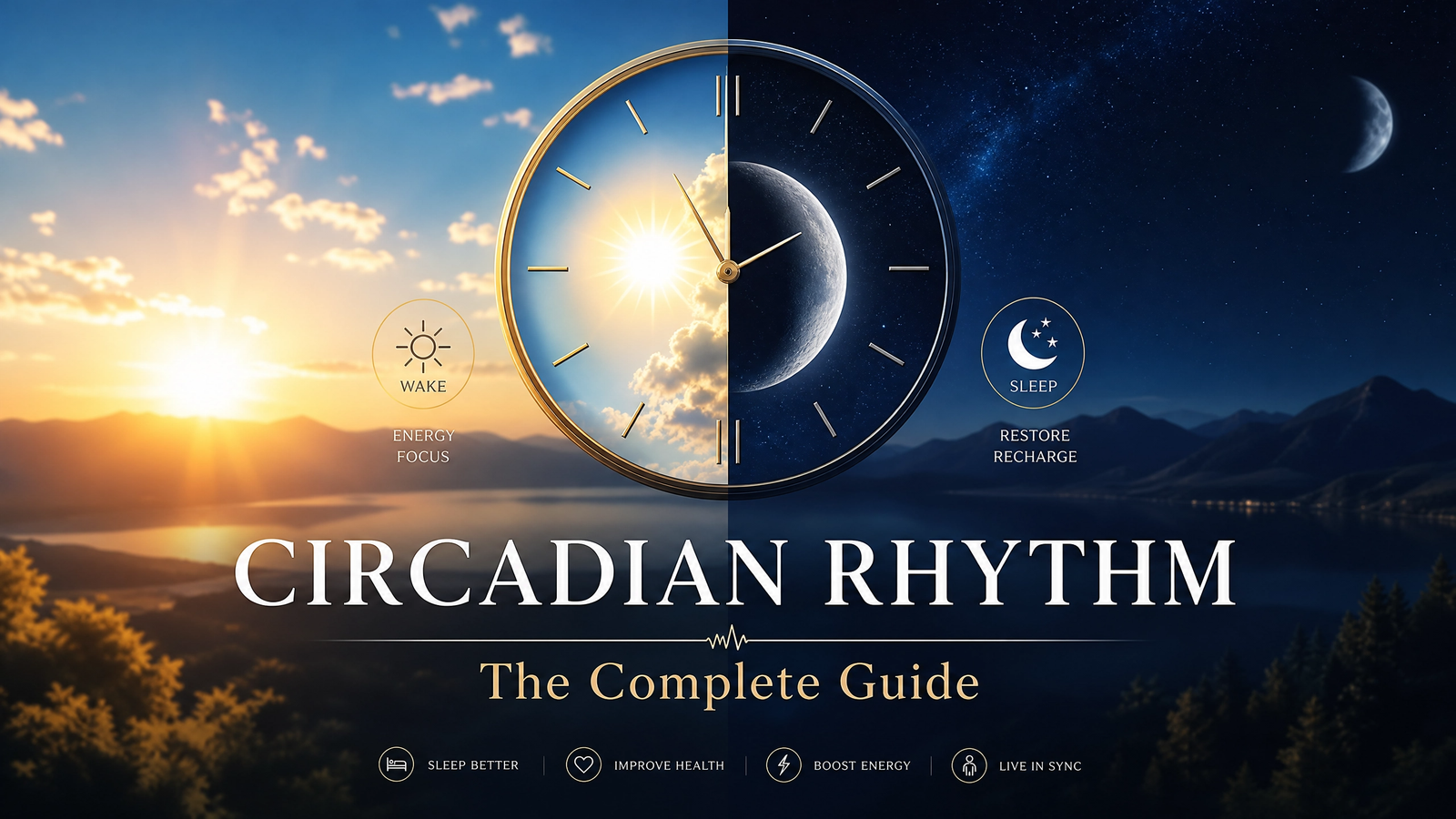
Your body runs on an invisible clock. Every hormone, every cell, every brain wave pulses to a 24-hour rhythm that most people never think about until it breaks. When your circadian rhythm goes off track, sleep becomes a battle, energy disappears, and your entire life feels out of sync. This is not just about feeling tired. This is about the fundamental biological system that governs when you wake, when you sleep, when you eat, and when you heal.
Your circadian rhythm is your body’s internal 24-hour clock. It is controlled by a cluster of about 20,000 neurons in your brain called the suprachiasmatic nucleus, located in the hypothalamus. This master clock receives direct input from your eyes, specifically from light-sensitive cells in your retina that do not help you see but instead tell your brain whether it is day or night.
When light enters your eyes in the morning, it signals your brain to suppress melatonin production and increase cortisol, waking you up and making you alert. As darkness falls, your brain ramps up melatonin production, lowers your body temperature, and prepares your body for sleep. This is not optional. This is biology. Every organ in your body has its own peripheral clock that syncs to the master clock. Your liver, your heart, your kidneys, your digestive system, all of them operate on circadian timing.
When this system works, you fall asleep easily, wake up refreshed, and feel energized throughout the day. When it breaks, nothing works right. You might sleep for eight hours and still feel exhausted. You might lie awake for hours despite being physically tired. You might feel wired at night and groggy in the morning. These are not character flaws. These are symptoms of a disrupted biological clock.
The Seven Types of Circadian Rhythm Problems
Circadian rhythm problems are not one single condition. The International Classification of Sleep Disorders (ICSD-3-TR) recognizes seven distinct types, and understanding which one affects you is the first step toward fixing it.
1. Delayed Sleep-Wake Phase Disorder (DSWPD)
This is the most common type, especially among teenagers and young adults. If you naturally cannot fall asleep before 2 or 3 AM and struggle to wake up before noon, you likely have this condition. Your internal clock is simply running later than society demands. Research suggests approximately 7 to 10 percent of people who complain about insomnia actually have delayed sleep-wake phase disorder rather than true insomnia. The prevalence among adolescents is estimated at around 7 percent. View study on PubMed
2. Advanced Sleep-Wake Phase Disorder (ASWPD)
This is the opposite of delayed phase. You fall asleep between 6 and 9 PM and wake up between 3 and 5 AM. This is more common in older adults and can be associated with depression. True advanced sleep-wake phase disorder is relatively rare, but age-related phase advances are common in elderly individuals.
3. Irregular Sleep-Wake Rhythm Disorder
This involves multiple sleep episodes throughout the day and night with no recognizable pattern. This is often seen in people with neurodegenerative diseases like Alzheimer’s disease, brain injuries, or certain developmental disabilities. Your sleep becomes fragmented and unpredictable.
4. Non-24-Hour Sleep-Wake Rhythm Disorder
This occurs when your internal clock is not 24 hours long. Instead of resetting each day, your sleep and wake times drift later and later. This is most commonly seen in completely blind individuals, with research indicating that between 50 and 70 percent of totally blind people develop this disorder because they cannot receive the light cues needed to reset their clock.
5. Shift Work Disorder
This affects people who work non-traditional hours, especially night shifts. Your body wants to sleep at night and be awake during the day, but your work schedule demands the opposite. Research shows that approximately 20 percent of workers in the United States perform shift work, and while not all develop shift work disorder, the risk increases significantly with counterclockwise shift changes and rapid schedule rotations.
6. Jet Lag Disorder
This is temporary but debilitating. When you cross three or more time zones, your internal clock is still aligned with your departure location. The severity depends on the direction of travel, with eastward travel generally causing worse symptoms because advancing your clock is harder than delaying it. Research suggests the rate of adjustment is approximately 1.5 hours per day after eastward travel and 1 hour per day after westward travel.
7. Circadian Sleep-Wake Disorder Not Otherwise Specified
This covers cases that do not fit the other categories but still involve a clear misalignment between the internal clock and the external environment.
Why Your Circadian Rhythm Breaks
Understanding the cause is essential because the treatment depends on it. Circadian rhythm problems do not appear out of nowhere. They have specific triggers.
Light Exposure: The Most Powerful Factor
Your brain is most sensitive to blue light, which is abundant in sunlight and also emitted by screens, LED bulbs, and electronic devices. If you spend your evenings under bright artificial light or staring at screens, you are sending a daytime signal to your brain at night. This suppresses melatonin and delays your clock. Conversely, if you do not get enough bright light during the day, especially in the morning, your brain lacks the signal it needs to anchor your rhythm to the 24-hour day.
Genetics Play a Significant Role
Research has identified clock gene polymorphisms that correlate with circadian preferences. Some people are genetically predisposed to be night owls or early birds. Studies on PubMed have shown associations between specific clock gene variants and human diurnal preference. If your parents were night owls, you likely inherited some of that tendency. Twin studies suggest circadian preferences have a heritability of approximately 50 percent.
Age Changes Your Rhythm
During puberty, circadian rhythms shift later, which is why teenagers naturally want to stay up late and sleep in. This is biological, not laziness. In older adults, the rhythm often shifts earlier, causing early morning awakenings. The amplitude of circadian rhythms also decreases with age, making the clock less robust and more easily disrupted.
Social and Work Pressures
Early school start times, night shifts, and social obligations that keep you awake past your natural bedtime all contribute to rhythm disruption. Lifestyle factors like irregular meal times, late-night exercise, and alcohol consumption near bedtime can further destabilize your clock.
Medical Conditions
Alzheimer’s disease, Parkinson’s disease, brain injuries, and certain endocrine disorders can damage the brain structures that control circadian rhythms. Children with autism spectrum disorder frequently experience abnormal sleep-wake rhythms. Cancer treatments and cranial irradiation can also disrupt the hypothalamic clock.
Medications and Substances
Stimulants, certain antidepressants, steroids, and beta-blockers can interfere with circadian signaling. Caffeine consumed within eight hours of bedtime can delay your clock and reduce sleep quality. Research indicates that alcohol can disrupt sleep architecture, even though it may initially make you feel drowsy.
The Real-World Impact of Circadian Rhythm Problems
This is not just about feeling tired. Circadian rhythm disruption has measurable consequences for your health, safety, and performance.
⚠️ Key Health Risks
- Cognitive decline: Difficulty concentrating, slower reaction times, impaired decision-making
- Cardiovascular risk: Shift workers show 40% greater cardiovascular disease risk
- Mental health: Strong overlap with depression and anxiety disorders
- Safety hazards: Increased risk of motor vehicle and workplace accidents
- Metabolic disruption: Weight gain, insulin resistance, digestive issues
Students with delayed sleep-wake phase disorder show correlations with negative mood, increased smoking, and higher alcohol consumption. Many deaths attributed to circadian rhythm disorders are actually the result of impaired performance from sleep deprivation, categorized as motor vehicle accidents, heavy machinery accidents, or workplace errors.
There is significant overlap between circadian rhythm disorders and depression. Some features of depressive disorders, such as early morning awakening and decreased REM latency, suggest underlying circadian dysfunction. Whether circadian disruption causes depression or depression causes circadian disruption is still being studied, but the connection is well-established. View research on PubMed
How to Test Whether You Have a Circadian Rhythm Problem
Before you can fix your rhythm, you need to know whether you actually have a circadian problem or something else. Many people who think they have insomnia actually have a circadian rhythm disorder. The symptoms overlap, but the treatments are different.
Keep a Sleep Diary
Record your sleep patterns for at least two weeks. Write down what time you go to bed, what time you try to fall asleep, what time you actually fall asleep, what time you wake up, and how you feel during the day. Look for patterns. If your natural sleep time consistently falls outside the socially accepted window and you feel fine when allowed to sleep on your own schedule, you likely have a circadian rhythm problem rather than insomnia.
Clinical Testing Options
For a more clinical assessment, doctors may use actigraphy, which involves wearing a wristwatch-like device that monitors your movement and light exposure over several days or weeks. This provides objective data about your sleep-wake patterns. Some specialists measure dim light melatonin onset (DLMO), which identifies when your brain starts producing melatonin in the evening. This is considered the gold standard for assessing circadian phase.
Polysomnography, or a sleep study, may be used to rule out other sleep disorders like sleep apnea or restless leg syndrome that could be contributing to your symptoms. However, a standard overnight sleep study in a lab may not capture circadian rhythm problems because it forces you to attempt sleep at a time your body is not ready.
🧮 Circadian Rhythm Alignment Calculator
Find out how well your lifestyle supports a healthy body clock
Your Circadian Rhythm Score
🎯 Which Circadian Rhythm Problem Do You Have?
Answer these 5 questions to identify your likely circadian rhythm type
1. If you had no obligations (work, school, family) for a week, what time would you naturally fall asleep?
2. How do you feel when you wake up at your “natural” time (without an alarm)?
3. How is your sleep pattern on weekends vs. weekdays?
4. Do you experience any of the following? (Select the one that applies most)
5. How long have you had this sleep pattern?
Your Likely Circadian Rhythm Type
How to Fix Your Circadian Rhythm
The treatment depends on the specific disorder and your individual circumstances, but several evidence-based approaches exist.
Light Therapy: The Most Powerful Non-Pharmacological Treatment
Bright light boxes that produce 10,000 lux of light can shift your clock in the desired direction. To move your sleep and wake times earlier, use the light box immediately upon waking in the morning. This is effective for delayed sleep-wake phase disorder, irregular sleep-wake rhythm disorder, and eastward jet lag. To move your sleep and wake times later, use the light box in the late afternoon or early evening. This helps with advanced sleep-wake phase disorder, shift work disorder, and westward jet lag.
The timing matters. Light exposure at the wrong time can make your problem worse. Side effects of light therapy may include eye strain, headaches, migraines, nausea, and agitation. Consult a healthcare provider before starting light therapy if you have an eye condition or take medications that increase light sensitivity.
Melatonin Supplements
Melatonin can help shift your clock when taken at the right time. For delayed sleep-wake phase disorder, low doses of 0.3 to 5.0 milligrams taken 3 to 6 hours before your desired bedtime may advance your sleep onset. Research published in the Journal of Clinical Sleep Medicine suggests melatonin can advance endogenous melatonin secretion by approximately 1.18 hours on average and reduce sleep onset latency by about 23 minutes. However, melatonin supplements are not regulated by the FDA in the United States, meaning dose and purity can vary between brands. NIH Melatonin Fact Sheet
Prescription Options
Prescription melatonin receptor agonists like ramelteon and tasimelteon work similarly to melatonin but with more consistent dosing. Tasimelteon was the first medication approved by the FDA specifically for non-24-hour sleep-wake rhythm disorder in blind individuals. These medications require a prescription and should only be used under medical supervision.
Chronotherapy
This involves gradually shifting your sleep schedule by delaying your bedtime by two to three hours every few days until you reach your desired schedule. This is sometimes used for delayed sleep-wake phase disorder but requires strict adherence and can be difficult to maintain.
Behavioral Interventions
These form the foundation of treatment. Establish a consistent sleep schedule, even on weekends. Create a relaxing bedtime routine. Keep your bedroom cool, dark, and quiet. Use your bedroom only for sleep and intimate activities. Avoid bright lights and electronic screens for at least one hour before bedtime. Limit caffeine after midday and avoid alcohol near bedtime. Get regular physical activity during the day but not within three hours of bedtime.
For shift workers, strategic napping before a night shift can improve alertness. Wearing light-blocking glasses when outside during daylight hours can help night workers maintain darkness signals. Maintaining a consistent sleep schedule even on days off, when possible, helps stabilize the rhythm.
Cognitive Behavioral Therapy for Insomnia (CBT-I)
This may benefit people with circadian rhythm disorders because the overlap between delayed sleep-wake phase disorder and insomnia is substantial. When patients with delayed sleep-wake phase disorder try to go to bed at socially acceptable times, they often develop insomnia symptoms. CBT-I addresses the anxiety and maladaptive behaviors that develop around sleep.
Natural Supplements and Lifestyle Support for Circadian Health
Beyond medical treatments, several natural approaches may support circadian rhythm health. These are not cures, but they can complement other treatments. Individual results vary significantly.
Magnesium
Magnesium plays a role in the biochemical pathways that regulate sleep and circadian function. Research published in peer-reviewed journals suggests that magnesium supplementation may help improve sleep quality in some individuals, particularly those with low magnesium levels. The recommended dietary allowance for magnesium is 310 to 420 milligrams per day for adults, depending on age and sex.
L-Theanine
An amino acid found in green tea, L-theanine may promote relaxation without sedation. Studies suggest that L-theanine may support sleep onset and quality in some individuals, potentially by modulating brain wave activity.
Ashwagandha
An adaptogenic herb used in traditional Ayurvedic medicine, ashwagandha has been studied for its potential effects on stress and sleep. Research suggests that ashwagandha supplementation may help reduce stress and improve sleep quality in some adults.
Glycine
An amino acid that may help lower core body temperature, which is a signal your body uses to initiate sleep. A study published in Neuropsychopharmacology found that glycine ingestion before bedtime may improve subjective sleep quality in some individuals.
Vitamin B12
This has been explored in combination therapies for circadian rhythm disorders, though evidence for its standalone efficacy is limited. Some studies have used it alongside phototherapy and other interventions with reported success rates around 45 percent.
The key with any supplement is that individual results vary significantly. What works for one person may not work for another. Always consult a healthcare provider before starting any new supplement, especially if you take medications or have a medical condition.
Sleep Support Products That Can Help Reset Your Rhythm
While lifestyle changes and medical treatments address the root causes of circadian rhythm problems, many people benefit from additional sleep support while their clock recalibrates. The following two products are designed to support natural sleep patterns and may help you fall asleep faster, stay asleep longer, and wake up feeling more refreshed.
🔗 Affiliate Disclosure: We earn a commission if you purchase through this link, at no extra cost to you.
🌙 Sleep Restore Pro
A natural sleep support formula designed to help you fall asleep faster and experience deeper, more restorative sleep.
According to the product label, the manufacturer states that Sleep Restore Pro combines melatonin with calming botanicals and essential minerals to support your body’s natural sleep-wake cycle. The formula includes ingredients that may help reduce nighttime awakenings and promote a sense of calm before bed.
- May help reduce the time it takes to fall asleep
- Supports deeper, more continuous sleep cycles
- Contains melatonin to support circadian alignment
- Includes calming botanical extracts
- Designed for adults struggling with sleep onset
Many users report that Sleep Restore Pro helps them establish a more consistent sleep schedule, which is critical for anyone trying to reset a disrupted circadian rhythm. If you have been struggling with delayed sleep onset or frequent nighttime waking, this product may provide the support your body needs while you implement the behavioral and environmental changes discussed in this guide. The manufacturer recommends taking it 30 minutes before your desired bedtime as part of a consistent sleep routine.
Learn More About Sleep Restore Pro →Claims about this specific product are based on manufacturer-provided information. Individual results vary. These products are not intended to diagnose, treat, cure, or prevent any disease.
🔗 Affiliate Disclosure: We earn a commission if you purchase through this link, at no extra cost to you.
💤 Dream Deep Complex
A premium sleep formula designed to support deep, uninterrupted sleep cycles and improve overall sleep quality.
According to the product label, the manufacturer states that Dream Deep Complex focuses on enhancing the quality of sleep rather than just helping you fall asleep. The formula contains ingredients that may support the production of sleep-promoting neurotransmitters and help maintain stable sleep architecture throughout the night.
- Supports deep, uninterrupted sleep cycles
- May help maintain stable sleep architecture
- Designed to reduce nighttime awakenings
- Contains ingredients that support neurotransmitter production
- Formulated for adults with poor sleep quality
This is particularly important for people with circadian rhythm problems because fragmented sleep, where you wake up multiple times, prevents your clock from stabilizing. Many users report waking up feeling more refreshed and experiencing less daytime grogginess after using Dream Deep Complex consistently. The manufacturer suggests that the formula works best when combined with a regular sleep schedule and a dark, cool sleep environment. If your circadian rhythm problem involves waking up too early or experiencing poor sleep quality, this product may help you achieve the deep, continuous sleep your body needs to heal and reset.
Learn More About Dream Deep Complex →Claims about this specific product are based on manufacturer-provided information. Individual results vary. These products are not intended to diagnose, treat, cure, or prevent any disease.
Both products are intended to complement, not replace, the circadian rhythm strategies outlined in this guide. They work best when combined with consistent light exposure management, a regular sleep schedule, and the other behavioral interventions discussed above.
Frequently Asked Questions About Circadian Rhythm Problems
What is the difference between circadian rhythm problems and insomnia?
Insomnia involves difficulty falling asleep or staying asleep despite having adequate opportunity and circumstances for sleep, often resulting in daytime impairment. Circadian rhythm problems involve a mismatch between your internal clock and your external environment. With a circadian rhythm disorder, you can usually sleep well if allowed to follow your natural schedule. With insomnia, sleep is difficult regardless of timing. The treatments differ, so correct diagnosis matters.
Can circadian rhythm problems be cured?
Some circadian rhythm problems, like jet lag, resolve on their own as your clock adjusts to the new time zone. Others, like delayed sleep-wake phase disorder, often persist but can be managed effectively with consistent treatment. Some people find their symptoms resolve in adulthood, particularly if the disorder began in adolescence. The key is consistent management rather than expecting a permanent cure for chronic conditions.
How long does it take to reset a circadian rhythm?
It depends on the method and the severity of the disruption. Light therapy can shift your clock by 30 minutes to 2 hours per day. Melatonin timing adjustments may take several days to weeks to show full effects. After eastward travel, your body adjusts at approximately 1.5 hours per day. After westward travel, approximately 1 hour per day. Behavioral changes require consistent practice for at least two to four weeks before you notice significant improvement.
Do circadian rhythm problems cause depression?
There is a well-established bidirectional relationship. Circadian rhythm disruption can contribute to depressive symptoms, and depression can disrupt circadian rhythms. Some research suggests that circadian misalignment may be a risk factor for developing depression, particularly in vulnerable individuals. Treating the circadian problem may improve mood in some cases, but depression often requires its own treatment approach.
Are circadian rhythm problems genetic?
Yes, genetics play a significant role. Twin studies have shown that circadian preferences have a heritability of approximately 50 percent. Specific gene variants, including polymorphisms in clock genes, have been associated with delayed sleep phase and other circadian traits. However, environment and behavior also matter. Even with a genetic predisposition, you can often manage your rhythm through lifestyle and treatment.
Can teenagers outgrow delayed sleep-wake phase disorder?
Many do. The natural circadian shift that occurs during puberty often resolves in early adulthood as the biological clock matures. However, some people continue to have a delayed phase throughout their lives. Early intervention with light therapy, melatonin, and behavioral changes can help teenagers manage symptoms and prevent the development of secondary problems like school avoidance or depression.
Is melatonin safe for long-term use?
Melatonin is generally considered safe for short-term and medium-term use, with few reported side effects. The most common side effects include headache and nasopharyngitis. However, long-term safety data is limited. Two observational studies on children and adolescents with an average follow-up of four years did not document any safety issues. Melatonin should be avoided during pregnancy and breastfeeding and used with caution in patients with liver injury. Always consult a healthcare provider for personalized guidance.
Can I fix my circadian rhythm without medication?
For many people, yes. Light therapy, behavioral interventions, and strict sleep scheduling can be highly effective, especially for delayed sleep-wake phase disorder and jet lag. Shift work disorder is more challenging to manage without some form of intervention because the external environment works against your biology. The severity of your symptoms and your specific disorder type will determine whether medication is necessary.
What is the best light for circadian health?
Bright white light with a color temperature around 5600 to 6500 Kelvin in the morning helps anchor your clock and promotes alertness. In the evening, dim, warm light with a color temperature below 3000 Kelvin supports melatonin production. Avoid blue light from screens and LED bulbs for at least one hour before bed. If you must use screens, enable night mode or wear blue-light-blocking glasses.
How do I know if I need to see a sleep specialist?
If your sleep problems persist for more than three months, significantly impact your daily functioning, or do not improve with basic sleep hygiene changes, consult a healthcare provider. A sleep specialist can perform actigraphy, measure your melatonin onset, and rule out other sleep disorders. If you are a shift worker experiencing severe symptoms, or if you have a medical condition that might be contributing to your sleep problems, seek professional evaluation sooner.
📚 About This Guide
This guide was created using the following approach:
- Information is based on publicly available research from sources including PubMed and the NIH
- Clinical guidelines from the American Academy of Sleep Medicine (AASM) were referenced
- Safety data from regulatory bodies (FDA, NIH Office of Dietary Supplements, EFSA) was reviewed
- We only include ingredients and treatments that have human clinical trials
- All affiliate relationships are disclosed transparently
We do not accept payment for positive reviews. All recommended products were selected based on ingredient quality, dosing transparency, and alignment with circadian rhythm science. We regularly update this guide as new research becomes available.